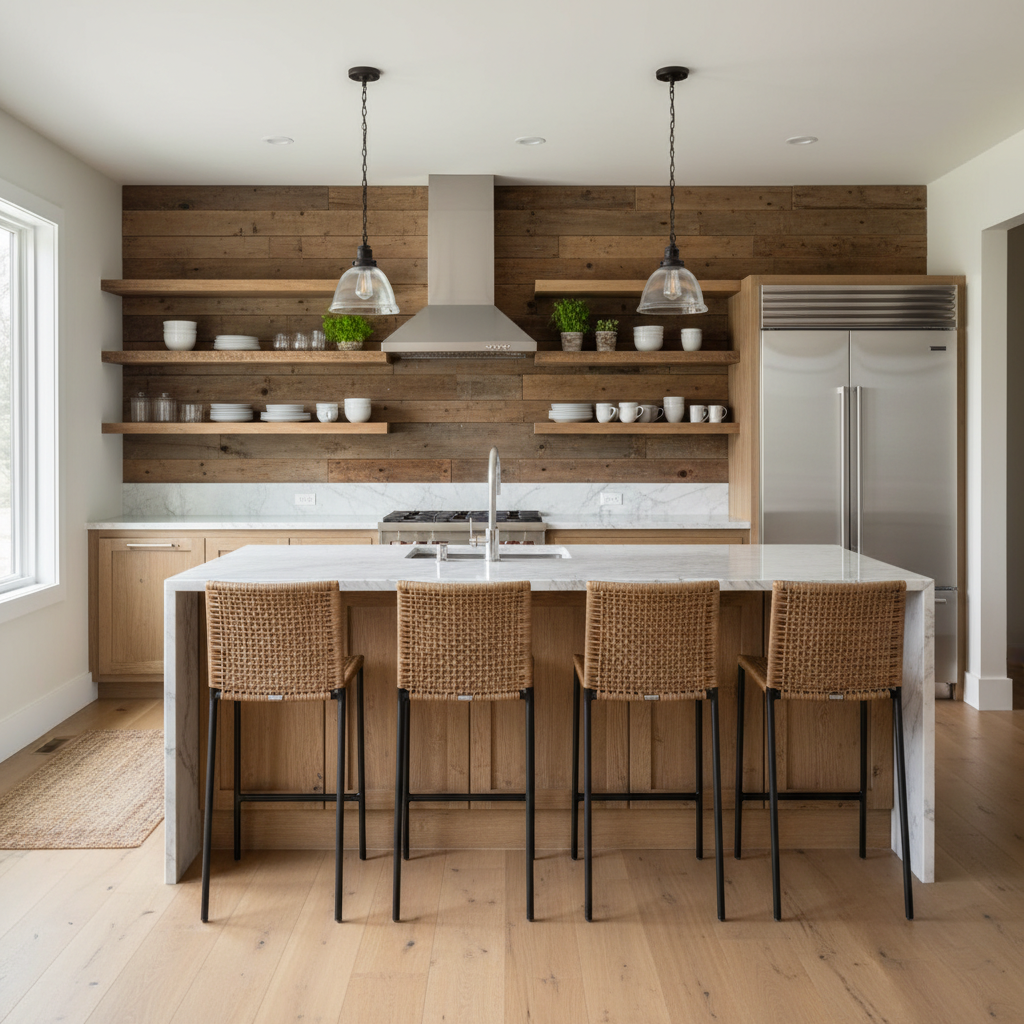
There is a reason the best restaurants in the world put wood on their walls. Walk into any Gordon Ramsay kitchen, any high-end farm-to-table dining room, and you will see it. Reclaimed wood. Not tile. Not paint. Wood with a century of character built right into the grain.
That same look belongs in your home kitchen. And it is easier to achieve than most people think.
A reclaimed wood kitchen wall transforms the room from functional to unforgettable. It adds warmth without clutter, texture without pattern overload, and a sense of history that no factory-made material can replicate. Whether you are working with a sprawling open-concept layout or a compact galley kitchen, authentic barn wood brings something that tile and subway backsplash simply cannot.
Why Reclaimed Wood Works in Kitchens
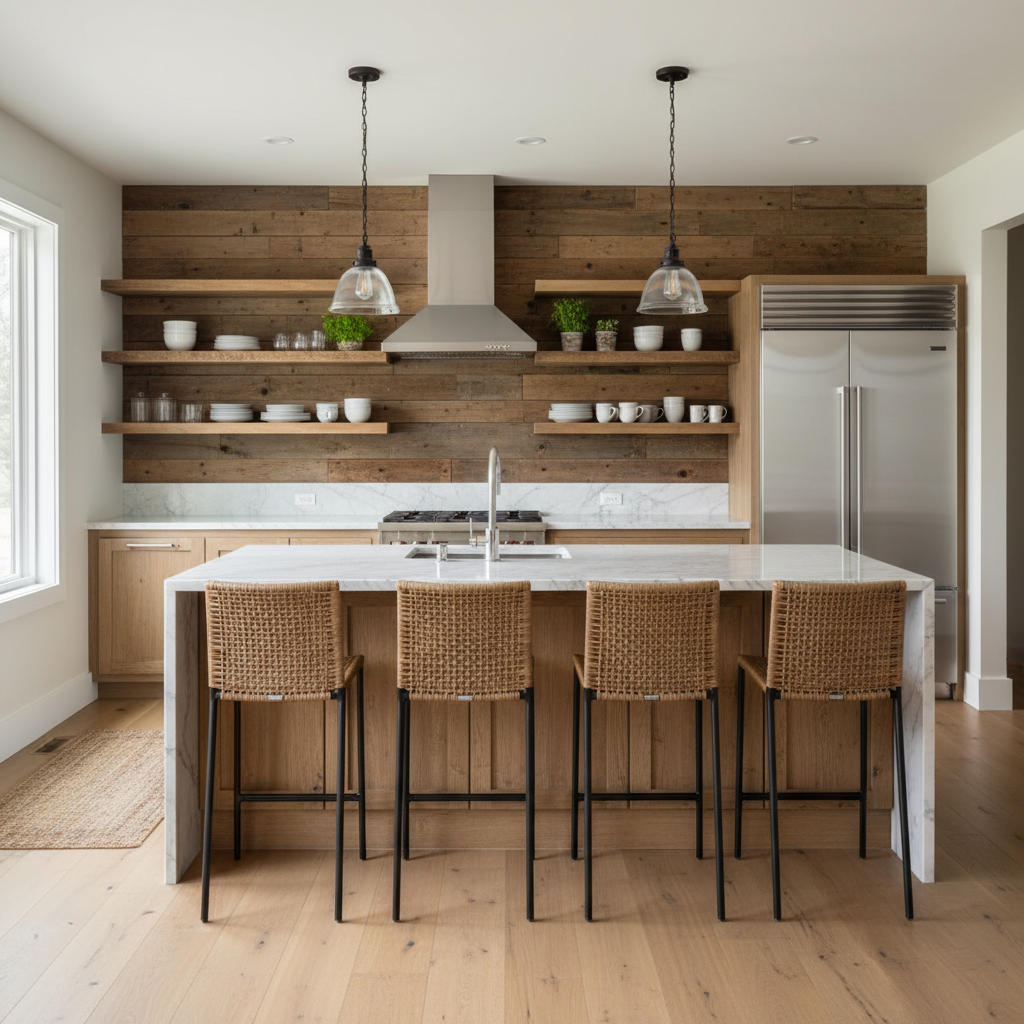
Kitchens are the heart of the home. They are where people gather, cook, eat, and talk. But most kitchen designs lean heavily on cold, hard surfaces: granite countertops, stainless steel appliances, ceramic tile. These materials are practical, but they can make the room feel sterile.
Reclaimed wood is the antidote. It introduces organic warmth that balances all those hard surfaces. The natural color variation, the saw marks, the old nail holes. Every board tells a story, and no two boards look alike.
Here is why homeowners and designers keep coming back to wood walls in kitchens:
- Warmth against cold materials. Wood softens the visual impact of stone counters and steel appliances.
- Texture without busyness. Unlike patterned tile or bold wallpaper, wood adds depth without competing with your decor.
- Restaurant-quality atmosphere. There is a reason high-end restaurants invest heavily in reclaimed wood interiors. It creates an inviting, elevated space that makes food and conversation feel better.
- Timeless appeal. Trends come and go. A hundred-year-old barn wood wall never looks dated because it was never trendy to begin with. It is simply classic.
If your kitchen feels like it is missing something, a reclaimed wood accent wall is almost always the answer.
The Best Spots for a Kitchen Wood Wall
You do not need to cover every wall in wood to make an impact. In fact, one well-placed accent wall creates a stronger visual effect than covering an entire room. Here are the most popular spots for a reclaimed wood kitchen accent wall.
Behind Open Shelving
This is the single most popular application we see. Open shelving has become a kitchen staple, and reclaimed wood behind those shelves creates a layered, curated look. The wood serves as a natural backdrop for dishes, glassware, plants, and cookbooks. It gives the eye something rich and warm to land on, rather than a flat painted wall.
The Backsplash Area (Above the Counter)
A wood backsplash makes a serious statement. This works best when the wood is installed above the countertop but not directly behind the stove or sink. For the area immediately behind a cooktop, you will want to pair the wood wall with a small section of tile or a stainless steel backsplash panel directly behind the burners, then let the wood take over the rest of the wall.
The key here is sealing. Two to three coats of matte polyurethane will protect the wood from kitchen moisture and make cleanup easy.
The Dining Wall
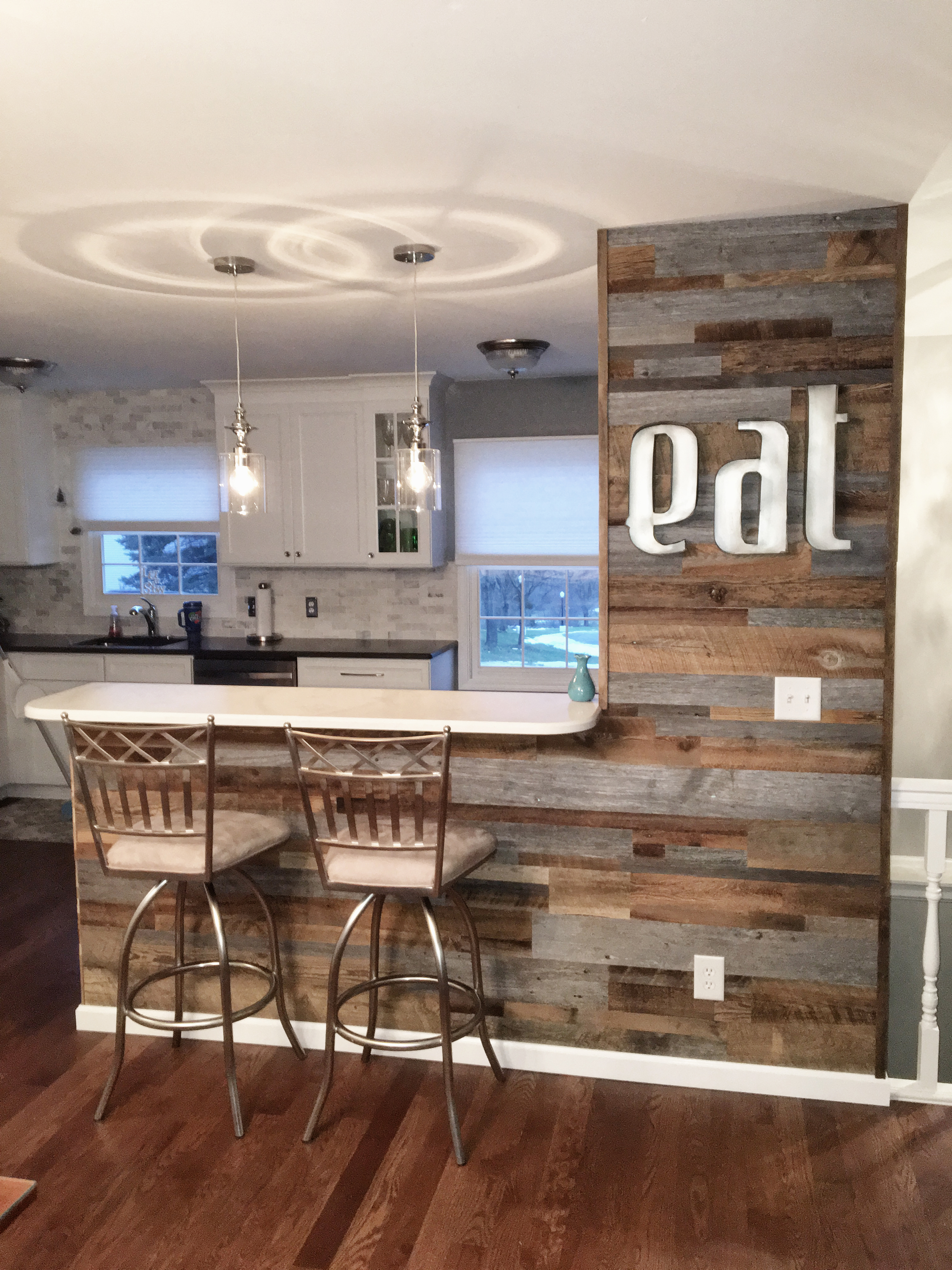
If your kitchen flows into a dining area, the wall behind the dining table is a natural spot for reclaimed wood. It anchors the eating space, creates a visual separation between cooking and dining zones, and gives the dining area its own personality.
This is especially effective in open-concept homes where the kitchen, dining, and living areas share one large space. A wood accent wall defines the dining zone without closing it off.
Kitchen Island Front
For kitchens with a large island, cladding the front face in reclaimed wood is a design move that pays off immediately. It turns a standard island into a statement piece. This works particularly well when the island faces a living or family room, since the wood face becomes the visual anchor of the entire open-concept space.
Range Hood Surround
Wrapping a range hood surround in reclaimed wood creates a dramatic focal point above the stove. This application works especially well in farmhouse and rustic kitchen designs. It frames the cooking area and draws the eye up, making the kitchen feel taller and more substantial.
How to Seal and Protect Reclaimed Wood in Kitchens
This is the question we hear most often: can reclaimed wood handle a kitchen environment?
Yes. With proper sealing.
Our 100+ year old barn wood is already naturally hard and dense. These boards survived a century in American barns, through temperature swings, humidity, and decades of use. They are tough. But kitchens have moisture, heat, and cooking grease in the air, so sealing the wood before or after installation is important.
Here is the process:
- Apply 2-3 coats of matte polyurethane. Matte finish preserves the natural look of the wood without adding a glossy, plastic appearance. It looks and feels like raw wood but with full protection.
- Let each coat dry completely before applying the next. Follow the manufacturer instructions for dry time, typically 2-4 hours between coats.
- Avoid direct water contact. Sealed reclaimed wood handles kitchen humidity and the occasional splash just fine. But it should not be used as a surface where water pools or where it will be directly hit by a running faucet.
- Keep wood away from open flame. Do not install reclaimed wood directly behind a gas burner. Leave at least 6 inches of clearance or use a non-combustible backsplash panel behind the cooktop.
Once sealed, the wood is easy to maintain. A damp cloth handles any dust or light splatters. The polyurethane creates an invisible barrier that keeps moisture out while letting the natural beauty of the wood show through.
Kitchen Accent Wall Ideas by Style
A reclaimed wood kitchen wall is not limited to one aesthetic. The same barn wood adapts to completely different kitchen styles depending on how you pair it.
Modern Farmhouse
The most natural fit. Pair reclaimed wood walls with white shaker cabinets, a farmhouse sink, and matte black hardware. The contrast between the crisp white cabinetry and the weathered wood creates that signature modern farmhouse balance: clean but warm, curated but not precious.
Industrial
Think exposed brick, concrete floors, and open ductwork. Reclaimed wood accent walls fit right in. The natural brown tones complement the industrial palette. Metal pendant lights over the island and open steel shelving complete the look.
Rustic and Cabin
For full rustic commitment, go with a larger wood wall installation. Pair it with butcher block countertops, warm-toned cabinets, and wrought iron hardware. This style works beautifully in lake houses, mountain homes, and cottages where the kitchen should feel like an extension of the natural surroundings.
Contemporary and Minimalist
This is the combination that surprises people. Reclaimed wood in a sleek, contemporary kitchen creates a striking contrast. Flat-panel cabinets in grey or navy, quartz countertops, and a large reclaimed wood feature wall behind the range. The wood becomes the one organic element in a clean, modern space, and it commands attention.
Choosing the Right Board Width for Your Kitchen
Board width changes the feel of the entire wall. We offer two widths, and each creates a different visual effect.
3.5 Inch Wide Boards
Best for: Smaller kitchens, backsplash areas, and detailed installations.
The narrower boards create more visual lines per square foot, which adds a sense of intricacy and detail. They work especially well on smaller walls where you want the wood to feel refined rather than rustic. The 3.5 inch width is also ideal for wrapping kitchen islands and range hood surrounds, where the tighter plank pattern creates a polished, intentional look. Price: $11.75 per square foot.
5.5 Inch Wide Boards
Best for: Large kitchen walls, open-concept dining walls, and full accent walls.
Wider boards create a bolder, more dramatic appearance with fewer seam lines. If you have a large wall to cover, the 5.5 inch width fills the space with authority. It reads as more rustic and substantial, which works perfectly for full kitchen accent walls and dining area feature walls. Price: $12.50 per square foot.
Not sure which width is right for your kitchen? Get in touch and send us your wall measurements. We help homeowners choose every day.
From Gordon Ramsay to Your Kitchen
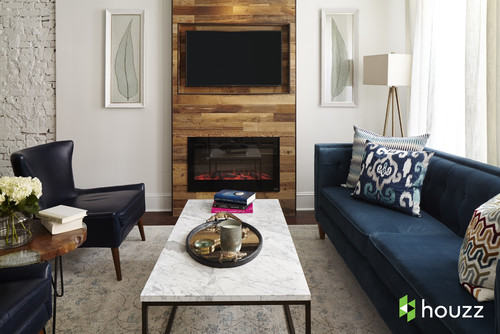
When Gordon Ramsay needed reclaimed wood for a restaurant project, he came to East Coast Rustic. When ESPN built out their studio spaces, they used our barn wood. The Baltimore Ravens, Starbucks locations, and dozens of other high-profile commercial installations have featured our 100+ year old reclaimed wood.
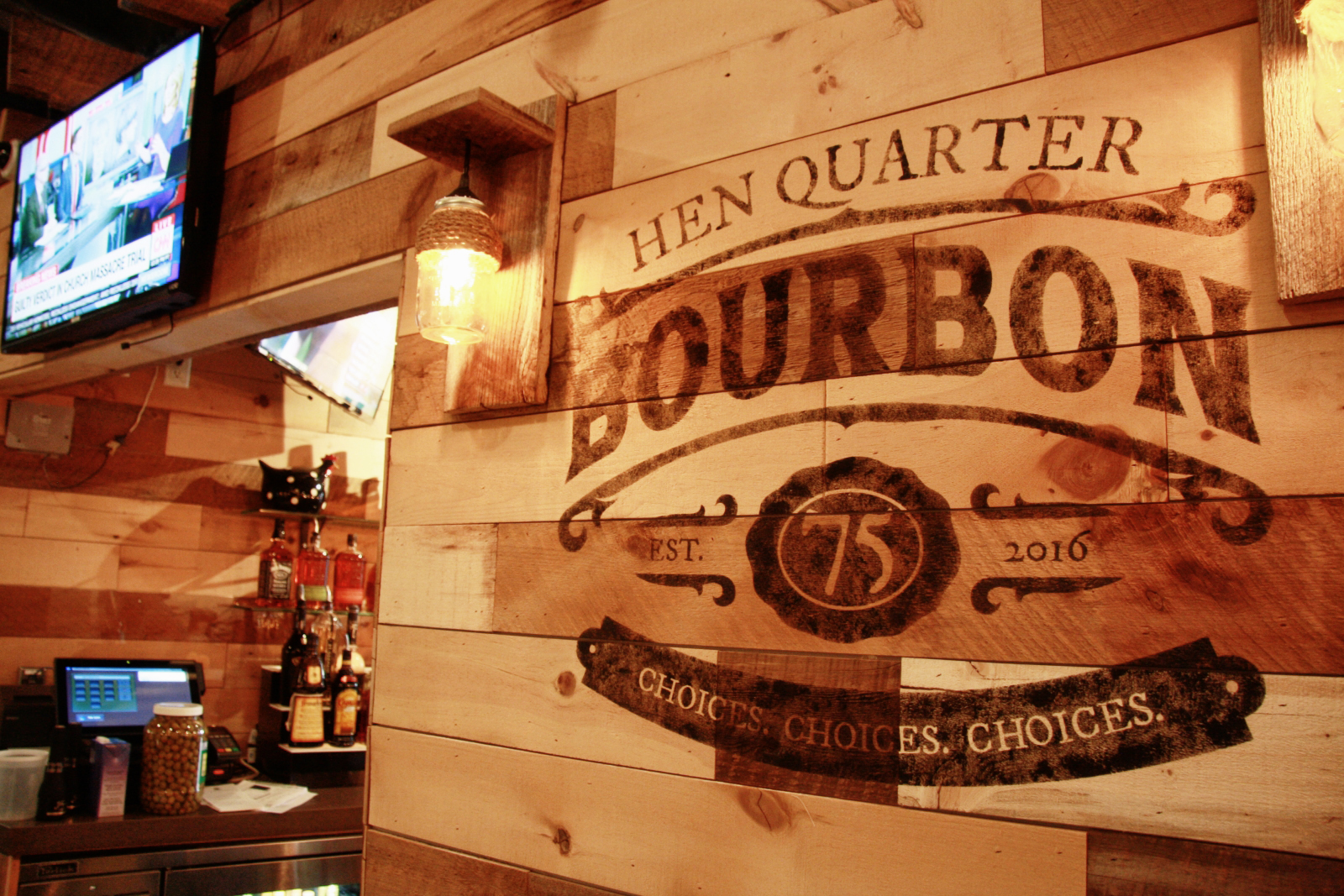
Because the same wood that goes into world-class restaurant kitchens and celebrity chef spaces is available to you at the same quality, from the same source. These are not mass-produced planks from a factory. Every board in our collection comes from dismantled American barns, many over a century old. The character, the patina, the nail holes, the saw marks. None of it is manufactured. All of it is real.
If reclaimed wood is good enough for Gordon Ramsay, it will work in yours.
Installation: Easier Than You Think
One of the biggest misconceptions about reclaimed wood walls is that installation is complicated. It is not. Our boards come ready to install with a simple nail gun or construction adhesive. Most homeowners complete a kitchen accent wall in a single weekend.
For the full step-by-step process, including how to measure your wall, calculate how much wood you need, and handle cuts around outlets and switches, check out our Complete Installation Guide.
Quick overview:
- Tools needed: Brad nailer or construction adhesive, level, measuring tape, miter saw
- Time: Most kitchen accent walls take 4-8 hours depending on wall size
- Skill level: Beginner to intermediate. No special carpentry skills required.
- Sealing: Apply matte polyurethane before or after installation for kitchen environments
Frequently Asked Questions
Can reclaimed wood go near a stove?
Yes, with precautions. Reclaimed wood should not be installed directly behind a gas burner or any open flame. Maintain at least 6 inches of clearance between the wood and a cooktop. Many homeowners install a small tile or stainless steel panel directly behind the stove and let the reclaimed wood cover the rest of the surrounding wall.
Is reclaimed wood food safe?
Our reclaimed barn wood is intended for wall applications, not food contact surfaces. It is not a cutting board or countertop. When installed as an accent wall, backsplash backdrop, or island cladding and sealed with polyurethane, it is perfectly safe and appropriate for kitchen environments.
Will kitchen humidity damage reclaimed wood?
Not when properly sealed. Two to three coats of matte polyurethane create a moisture barrier that protects the wood from normal kitchen humidity, steam, and the occasional splash. Our barn wood has already survived a century of American weather, so standard kitchen conditions are well within its range.
How do I clean a reclaimed wood kitchen wall?
A damp cloth is all you need. Once sealed with polyurethane, the surface wipes clean easily. For stubborn spots, use a mild soap solution. Avoid harsh chemical cleaners, as they can break down the polyurethane finish over time.
What is the difference between 3.5 inch and 5.5 inch boards?
The 3.5 inch boards create a more detailed, refined look with more plank lines per square foot. They are ideal for smaller walls, backsplash areas, and island fronts. The 5.5 inch boards have a bolder, more rustic appearance and work best on larger kitchen walls and full accent installations. See our accent wall ideas page for examples of both widths in real homes.
How much does a reclaimed wood kitchen wall cost?
Our 3.5 inch boards are $11.75 per square foot and our 5.5 inch boards are $12.50 per square foot. We sell in 20 square foot increments. A typical kitchen accent wall of 40-60 square feet runs between $470 and $750, making it one of the most affordable high-impact kitchen upgrades available.
Ready to Transform Your Kitchen?
A reclaimed wood kitchen wall is one of the few upgrades that delivers both immediate visual impact and lasting value. It is not a trend that will look dated in five years. It is authentic material with real history, and it makes every kitchen better.
Browse our two board options and order samples to see the wood in your own space:
- 3.5 Inch Wide Reclaimed Barn Wood Planks ($11.75/sq ft)
- 5.5 Inch Wide Reclaimed Barn Wood Planks ($12.50/sq ft)
Need help choosing the right width or calculating how much wood your kitchen needs? Reach out to our team. We have helped thousands of homeowners (and a few celebrity chefs) get exactly the right look.