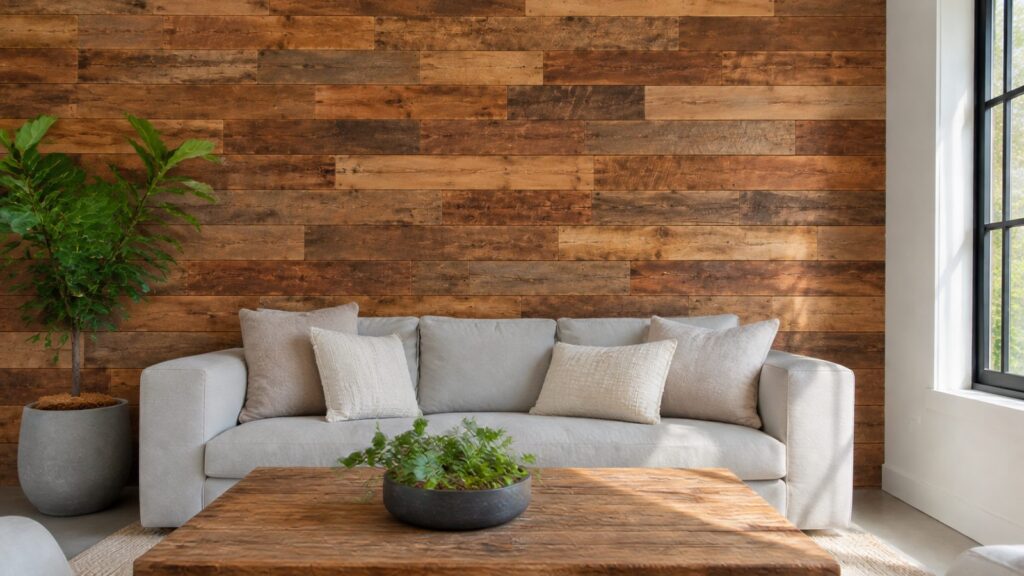
If peel and stick planks feel too flimsy or too risky for the wall you have in mind, here is the alternative: real wood planks put up with construction adhesive or a brad nailer instead of factory tape. At East Coast Rustic we mill ours from barns that stood for over 100 years. Each board is roughly 3/8 inch thick, several times the material of a typical adhesive-backed veneer, and the install takes most homeowners a single afternoon. We have shipped more than 1,100 of these walls across the US, including installs for Gordon Ramsay and the Baltimore Ravens.
Why people go looking for a peel and stick alternative
Peel and stick planks sell on convenience, and to be fair, sticking a board to a wall is about as easy as it gets. The complaints that push people to search for something better tend to fall into a few buckets:
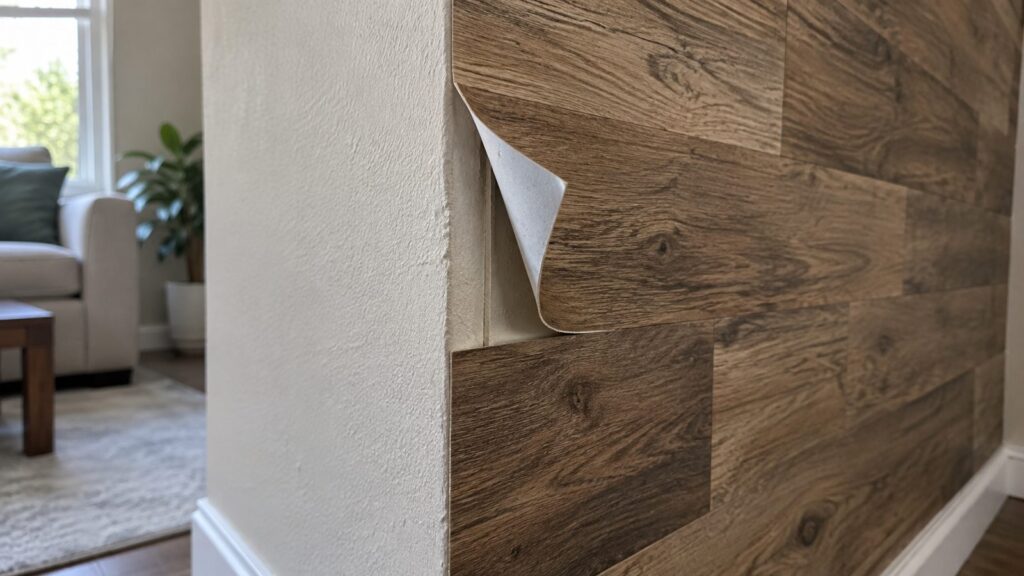
- The adhesive is the weak point. Tape bonds depend on the surface underneath. Textured drywall, fresh paint, cool basements and humidity swings all work against them, and a plank that lets go at a corner rarely re-sticks flat.
- The boards are thin. Most adhesive-backed products are a veneer, commonly around 1/8 inch or less. Thin boards can look flat at eye level because there is not enough material for real depth, edge shadow or texture.
- Some of it is not wood at all. Part of the category is printed vinyl or laminate made to look like wood grain. It photographs fine and repeats the same pattern every few boards.
- “Removable” is doing a lot of work. Clean removal is the big promise for renters, and reviews on how cleanly the tape actually comes off are mixed. If you own your home, that feature is not buying you much.
What you get with real reclaimed planks instead
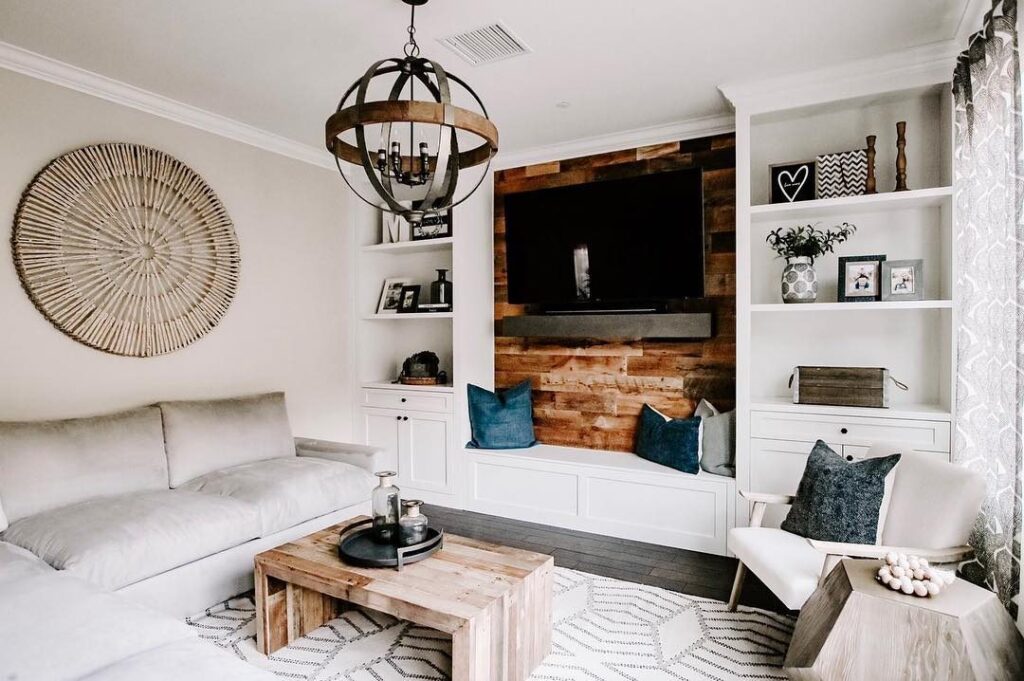
Our reclaimed barn wood planks are solid boards, not a laminated face. Every board carries the marks of a working barn: saw kerf lines, original nail holes and a century of weathering that a printing press cannot fake. The specs:
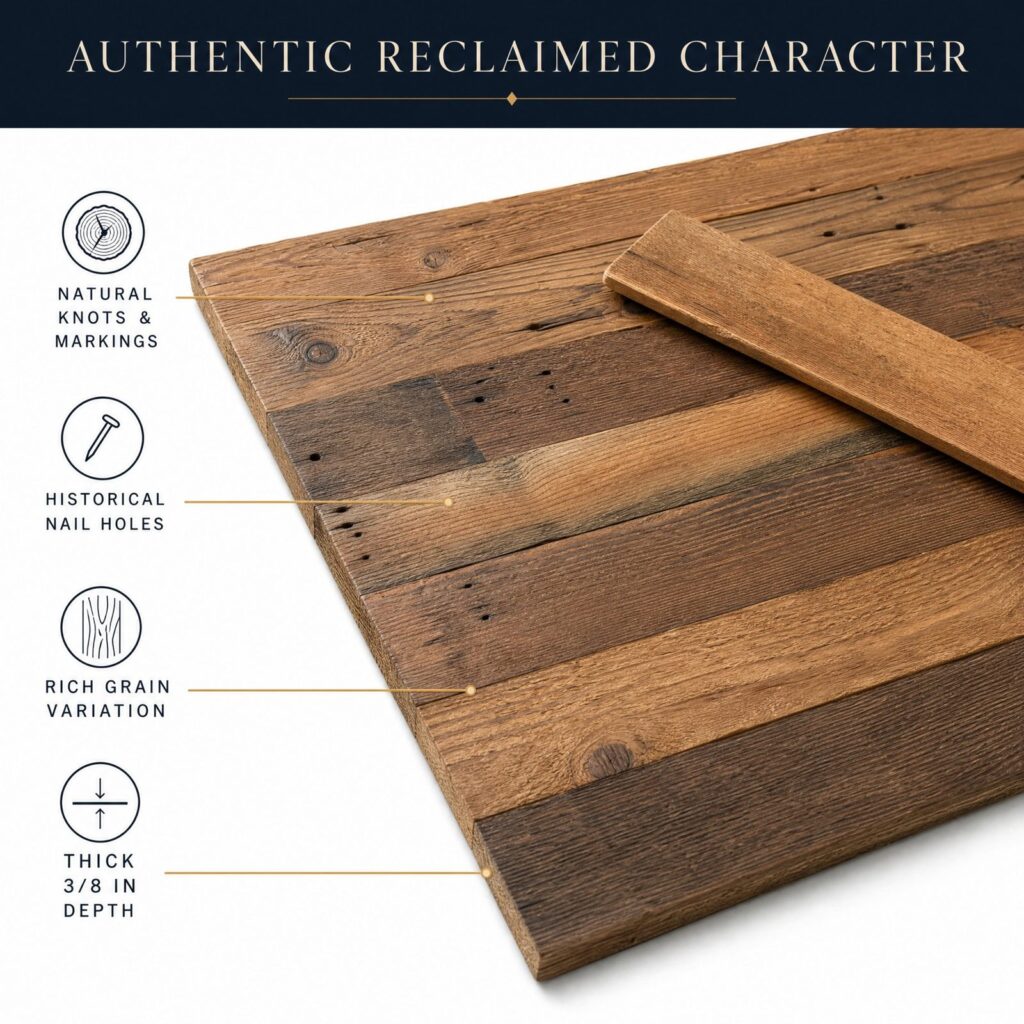
- About 3/8 inch thick, so boards cast real shadows and hold real texture
- Two widths, 3.5 inch and 5.5 inch, in random lengths up to 48 inches for the staggered brick-pattern look
- Two color lines: brown (warm walnut, honey and tan tones) and grey (weathered charcoal and silver)
- Sold by the square foot in 20 sq ft boxes, each box color-sorted from real barn board runs
Because no two barns weathered the same way, no two walls come out the same. That is the part peel and stick veneer cannot copy at any price.
Peel and stick vs real wood planks at a glance
| Factor | Peel and stick planks | Real reclaimed planks |
|---|---|---|
| Material | Thin wood veneer or printed vinyl | Solid barn wood, 100+ years old |
| Thickness | Commonly 1/8 inch or less | About 3/8 inch |
| Attachment | Factory adhesive strips | Construction adhesive or brad nails |
| Texture | Smooth or lightly embossed | Saw kerf marks, nail holes, real patina |
| Pattern | Repeats on printed products | Never repeats |
| Failure mode | Adhesive letting go over time | None. Glued and nailed boards stay put |
The install is easier than you might expect
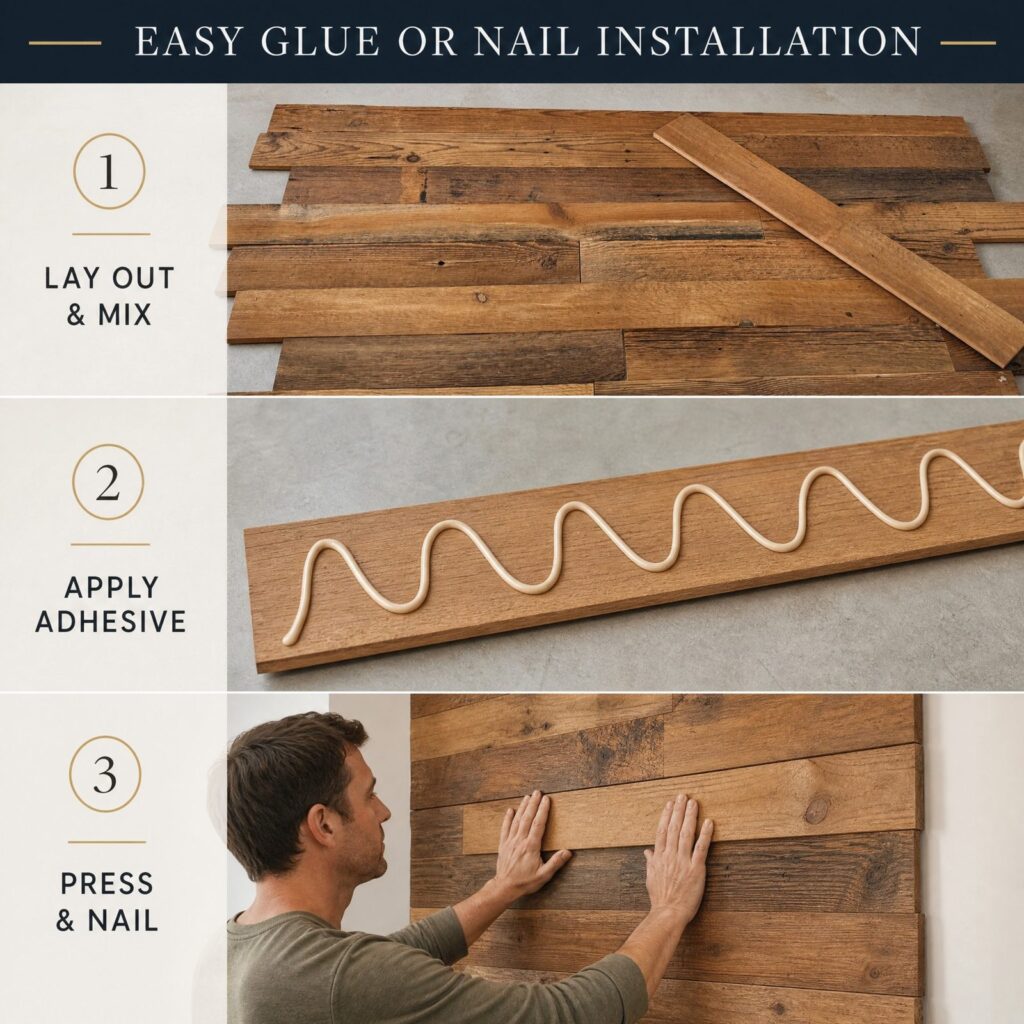
The honest trade-off with real planks is that you spend one afternoon with a caulk gun instead of twenty minutes peeling backers. Boards go straight over painted drywall with construction adhesive like Liquid Nails, with a brad nailer as belt and suspenders if you have one. No studs to find, no special skills. Random lengths mean cut waste is low, and a miter box handles the cuts if you do not own a power saw. Our step-by-step installation guide walks the whole process, outlets included.
What a real plank wall costs
Our reclaimed wood runs $10.75 per square foot, sold in 20 sq ft boxes at $215. A typical 10 x 8 foot accent wall lands around $1,075 in materials, and shipping is free to the lower 48 on orders over $200, which covers even a single box. The full math by wall size is in our accent wall cost guide. You are paying more than bargain vinyl and getting a wall made of actual 100 year old lumber that will outlast the house’s next three paint jobs.
Frequently asked questions
Is peel and stick wood ever real wood?
Some brands use a thin real-wood veneer with adhesive backing, others are printed vinyl or laminate. Even the real-wood versions are a fraction of the thickness of a solid plank, which is why they read flat compared to full boards.
Can I install real reclaimed planks myself?
Yes. Most of our customers are first-time DIYers. Adhesive plus optional brad nails over existing drywall, a level line to start and a saw or miter box for cuts. A typical accent wall is an afternoon project.
Do real wood planks work in humid rooms?
Solid reclaimed wood handles normal indoor humidity well. It spent a century in an unheated barn, so a laundry room or powder room does not scare it. Keep it out of direct water contact, like inside a shower.
What if I remove the wall later?
A glued plank wall is built to be permanent, and removal means drywall patching, same as tile or wainscoting. If you nail only, you are left with small brad holes that spackle in minutes. Peel and stick is marketed as the removable option, but tape that grips well enough to hold wood often takes drywall paper with it anyway.
Related reading
- How Much Does a Reclaimed Wood Accent Wall Cost?
- Reclaimed Wood vs Engineered Wood Panels
- How to Install a Reclaimed Wood Accent Wall
- DIY Reclaimed Wood Walls
Ready to see the wood in person?
Pick your width and color and we ship real barn wood to your door. Start with our most popular option, the 3.5 inch brown reclaimed wood planks, or go with the grey line for a cooler, weathered look.