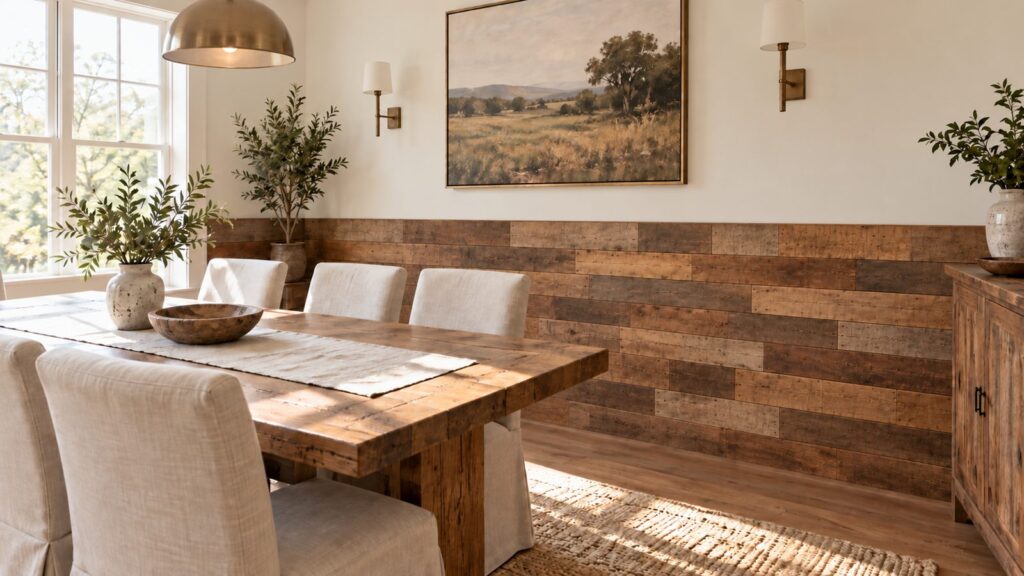
Reclaimed wood wall decor doesn’t have to mean planking an entire wall. Some of the best projects our customers send photos of are small: a half wall behind a dining table, or a framed barn wood panel hung above a sofa like art. Real barn wood carries so much texture that even 20 square feet changes how a room feels. This guide covers the decor projects that work best with genuine 100+ year old planks, what each one costs, and how to pull them off yourself in a weekend.
Start with real wood, or don’t bother
What makes a wood accent read as decor instead of cheap paneling is the material. Our planks come off barns that stood for over a century. They’re about 3/8″ thick, milled to 3.5″ or 5.5″ widths, and cut to random lengths capped at 48″. Each board carries its own saw kerf marks and original nail holes, and that variation is what your eye picks up from across the room.
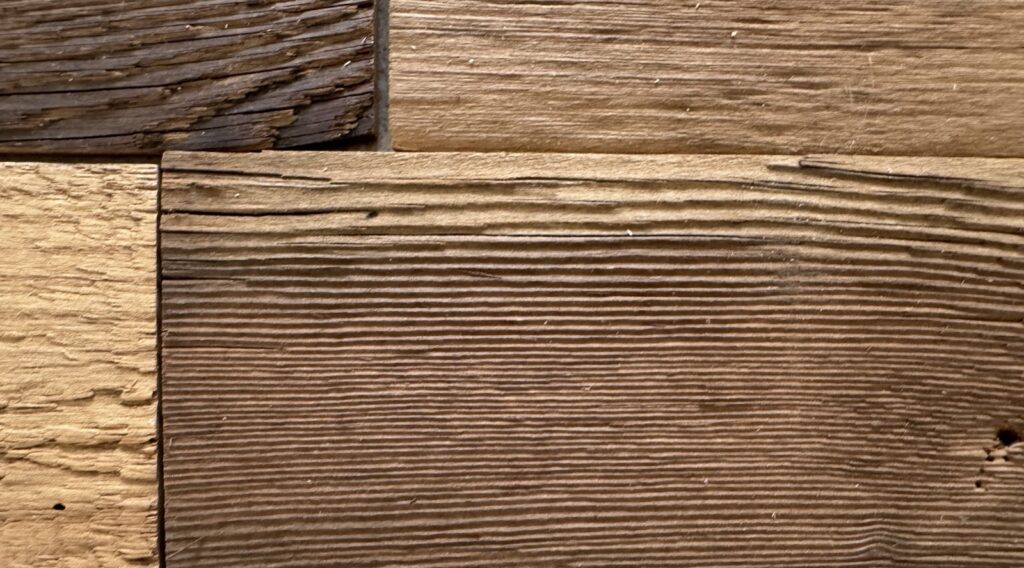
Thin printed veneer flattens out under normal lighting. If the wood is fake, a small decor piece looks like a craft project. If it’s real, it looks like it was always part of the house.
Both color lines work for decor. Brown reclaimed wood planks run from warm walnut to honey and tan. Grey reclaimed wood planks run from charcoal to soft silver. Pick one per project. Mixing brown and grey in a single install isn’t something we offer, and it rarely photographs well anyway.
Half walls and plank wainscoting
A half wall is the easiest way to get the barn wood look without committing a whole room to it. Plank the lower 36 to 40 inches of the wall, snap a level line so the top row finishes dead straight, and paint the upper section a calm color so the wood does the talking.
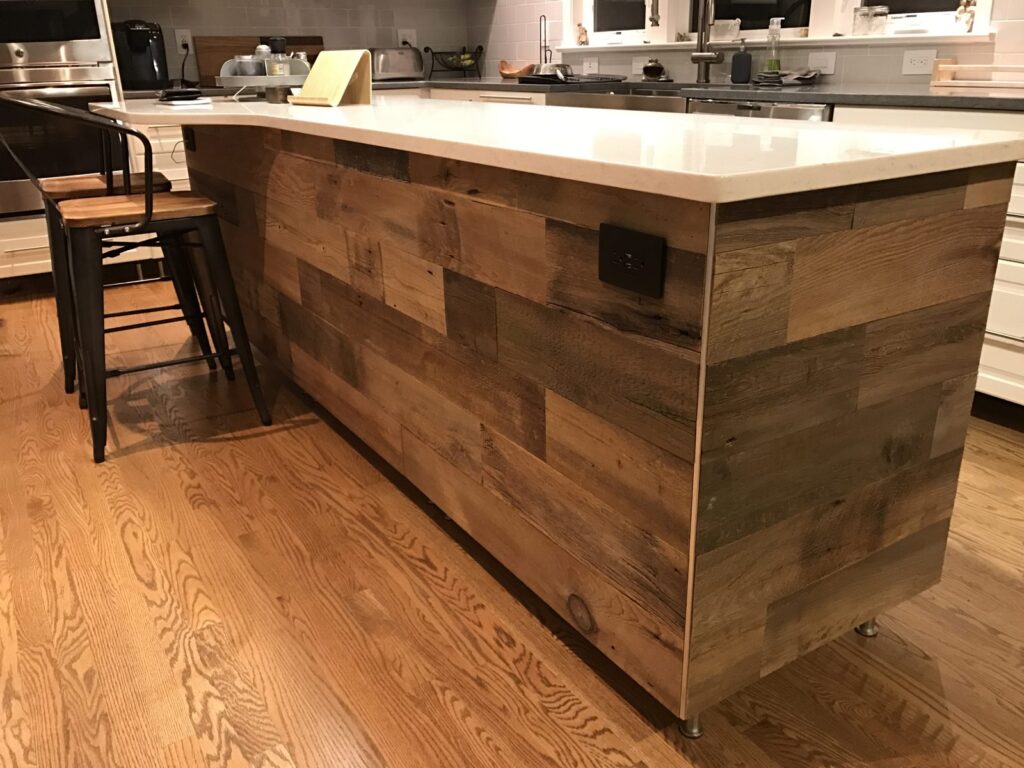
The math stays friendly too. A 12-foot dining room wall planked 40 inches high is right around 40 square feet, which is two of our 20 square foot boxes. At $10.75 per square foot you’re at about $430 for a feature most guests will assume was professionally built.
That’s less than a lot of wallpaper installs, and it lasts decades.
Framed barn wood panels
If you rent, or you’re just not ready to glue anything to drywall, build the decor as a panel instead. Cut a piece of 1/4″ plywood to your finished size, glue the planks to it with construction adhesive, keep the brick-pattern stagger so the seams never line up, and wrap the edge in a simple frame. Hang it the way you’d hang a heavy mirror, with anchors rated for the weight.
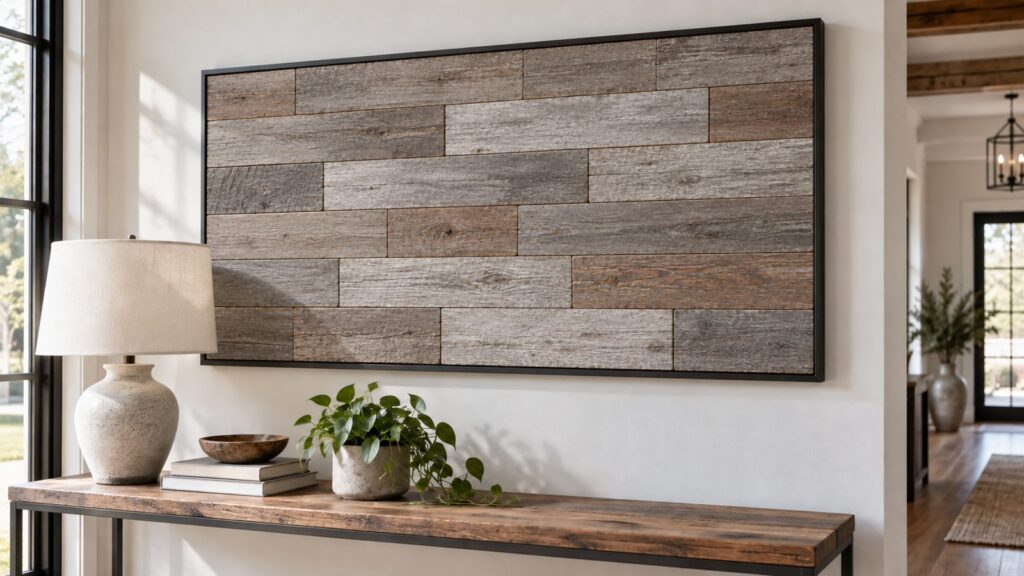
A 2-foot by 4-foot panel uses 8 square feet of wood, so a single box builds this and leaves enough for a second piece. Grey planks in a black frame over a console table is a combination we’ve seen work in everything from farmhouses to downtown condos.
Niches and shelf backs
Recessed niches, the back panel of a bookcase, the wall behind a coffee station: small surfaces put weathered texture right at eye level, where it earns its keep. Because our boards are only about 3/8″ thick, they tuck into recesses without swallowing the space, and the random lengths mean almost zero waste on narrow surfaces.
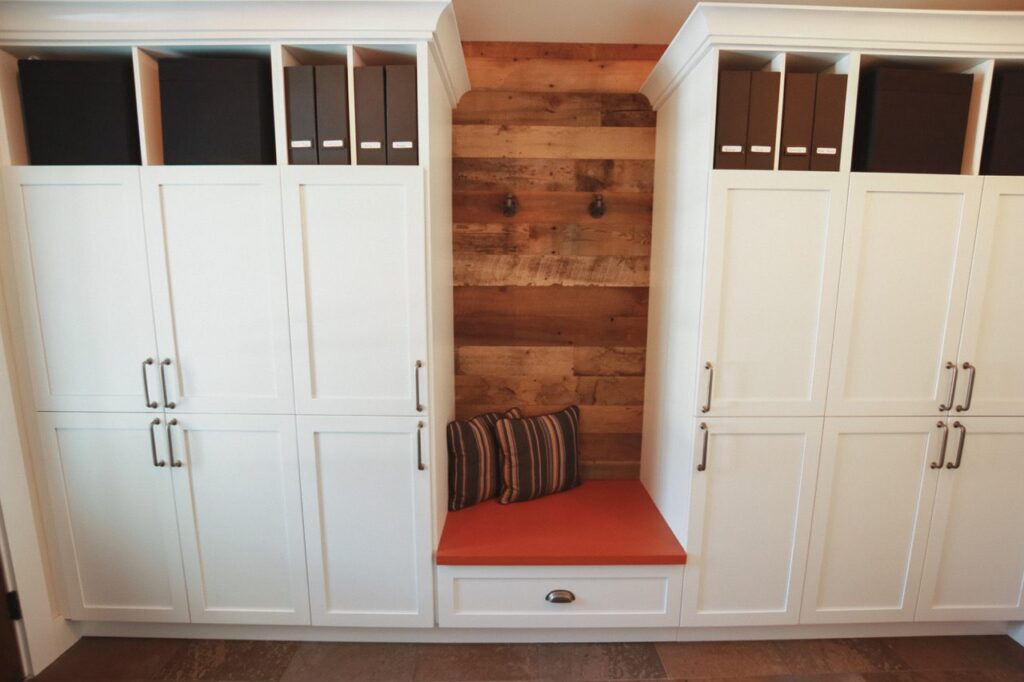
These are the same boards that went into Gordon Ramsay’s home makeover for a Hell’s Kitchen winner and into commercial installs for ESPN and the Baltimore Ravens. The project gets smaller; the texture reads the same.
What a decor project costs
The wood is priced per square foot and ships in 20 square foot boxes at $215 a box, with free US shipping on orders over $200, so every box qualifies.
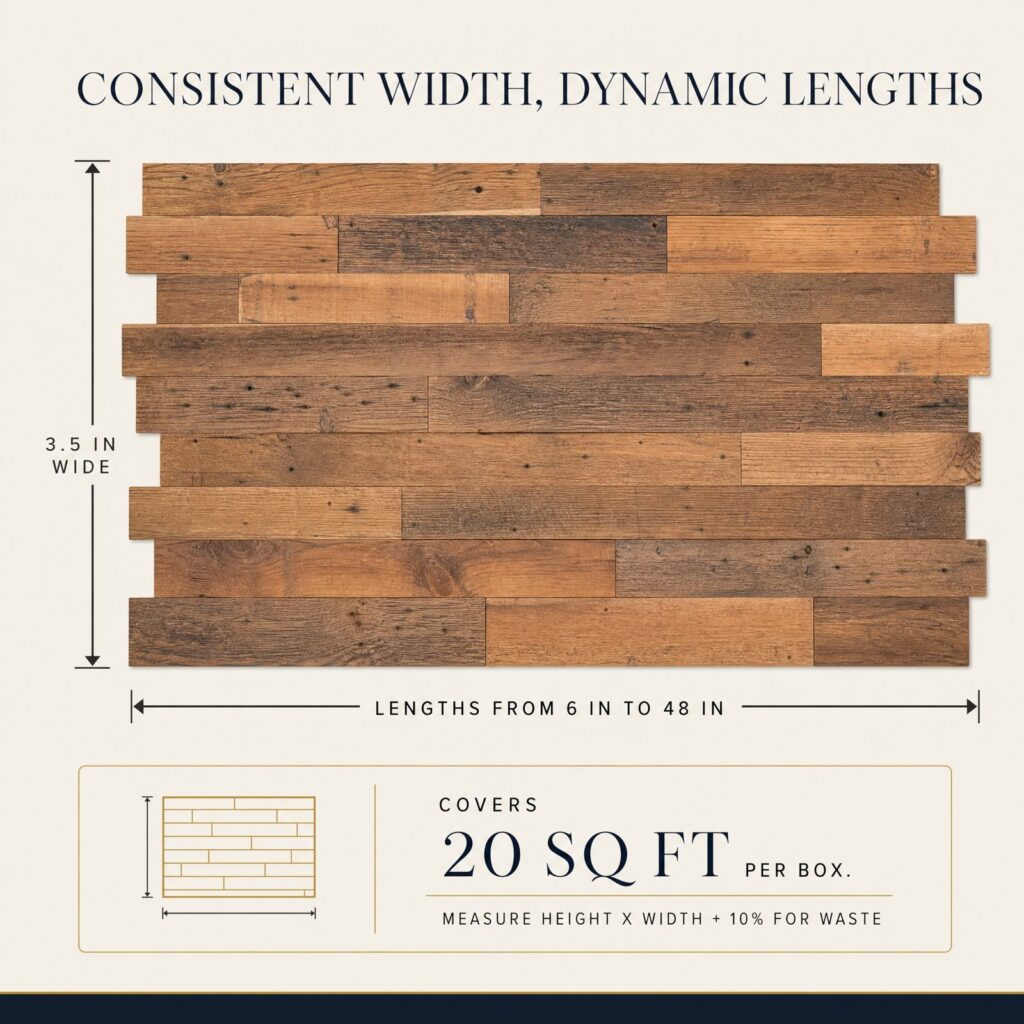
Here’s the trap with small projects: ordering exactly the square footage you measured. Random lengths mean end cuts, and decor pieces have proportionally more edges than one big open wall. Add 10 percent for waste and round up to the next box. Leftover boards have a way of turning into the next project anyway.
Frequently asked questions
How much reclaimed wood do I need for a small decor project?
One 20 square foot box covers most framed panels and shelf backs with room to spare. Measure width times height for each surface, add 10 percent for cuts, and round up to a full box.
How do I attach reclaimed wood without hitting studs?
You don’t need studs at all. Construction adhesive does the holding, and a few brad nails anywhere on the board keep each plank in place while the glue sets. For framed panels, glue the planks to a plywood backer and never touch the wall.
Can I use barn wood wall decor in a rental?
Yes, if you build panels instead of gluing to the wall. A framed panel hangs like heavy artwork and moves out with you. Half walls and full walls involve adhesive, so save those for a home you own.
Is reclaimed wood wall decor going out of style?
The faux versions dated fast, and honestly they deserved to. Boards with a century of genuine wear don’t follow trend cycles the way printed patterns do, which is why designers keep coming back to the real thing.
Related reading
- Reclaimed wood accent wall ideas
- Designing with grey reclaimed wood
- What a reclaimed wood accent wall costs
- DIY walls: how it all works
Ready to see the wood in person?
Every project on this page starts with the same box of planks. Browse the brown 3.5″ reclaimed wood planks, priced per square foot with free US shipping over $200, and see what a hundred years of weather looks like up close.