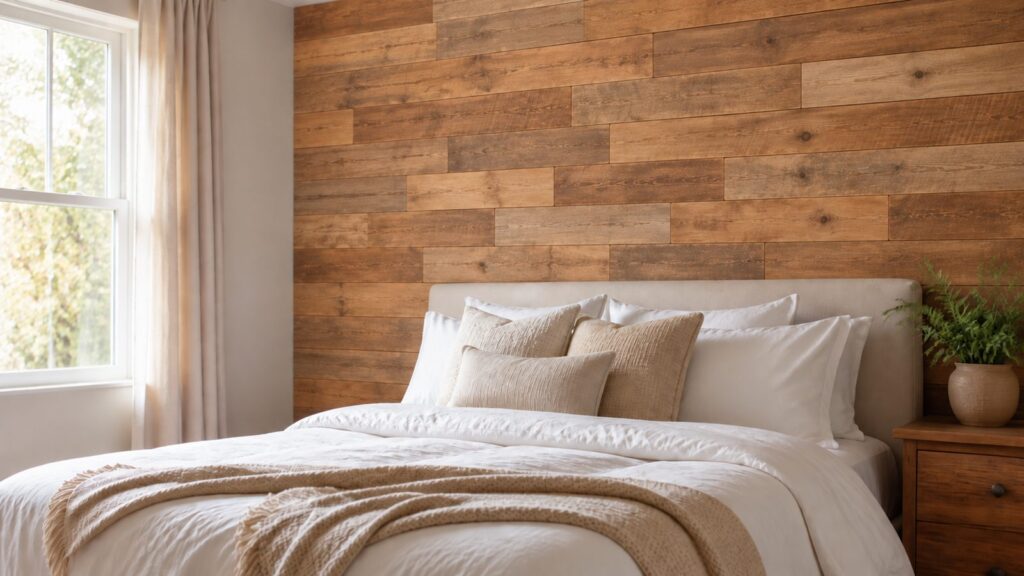
Properly sourced and prepped reclaimed wood is safe for indoor use. The horror stories you may have read about insect infestations and lead paint are real, but they almost always trace back to the same problem: wood with an unknown history. A board pulled from a known barn, then cleaned and inspected, is no riskier on your wall than new lumber. A pallet of “rustic wood” from an online marketplace with no origin story is a gamble. This guide covers the actual risks and exactly what to check before any board goes up in your home.
The real risks, and where they come from
Four things can make salvaged wood a problem indoors. Each one is avoidable once you know what to look for.
Insects. Old wood that sat in damp storage can host powderpost beetles or other wood borers. The tell is fresh activity: tiny round exit holes with fine, flour-like powder around them. Old, dark, empty holes are just character. Fresh pale powder means live insects.
Lead paint. Paint applied before 1978 can contain lead, and cutting or sanding painted salvage wood releases that lead as dust. The safe rule for a DIY project is simple: skip painted mystery wood entirely. Unpainted barn boards never had paint on them, so there is nothing to worry about.
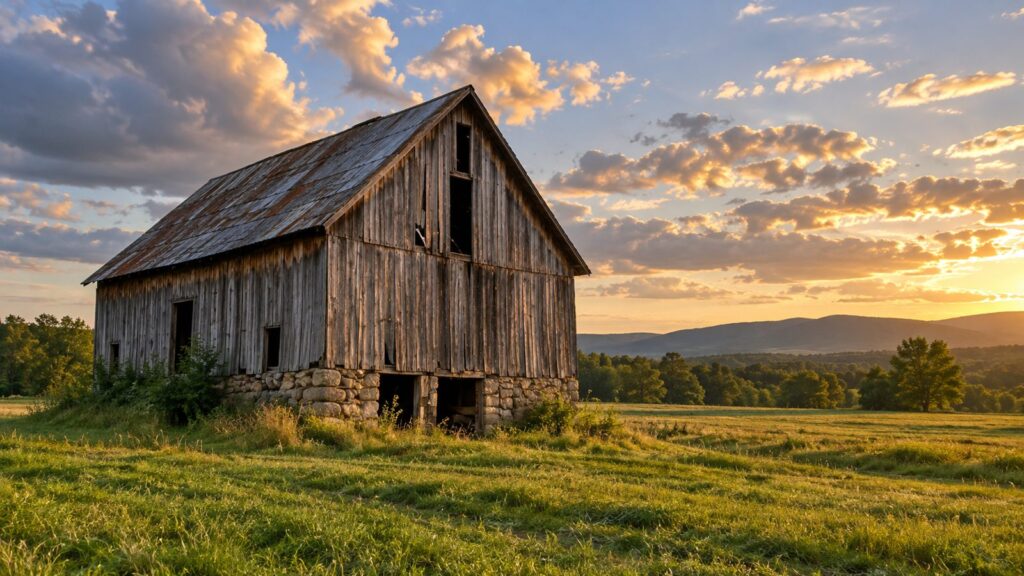
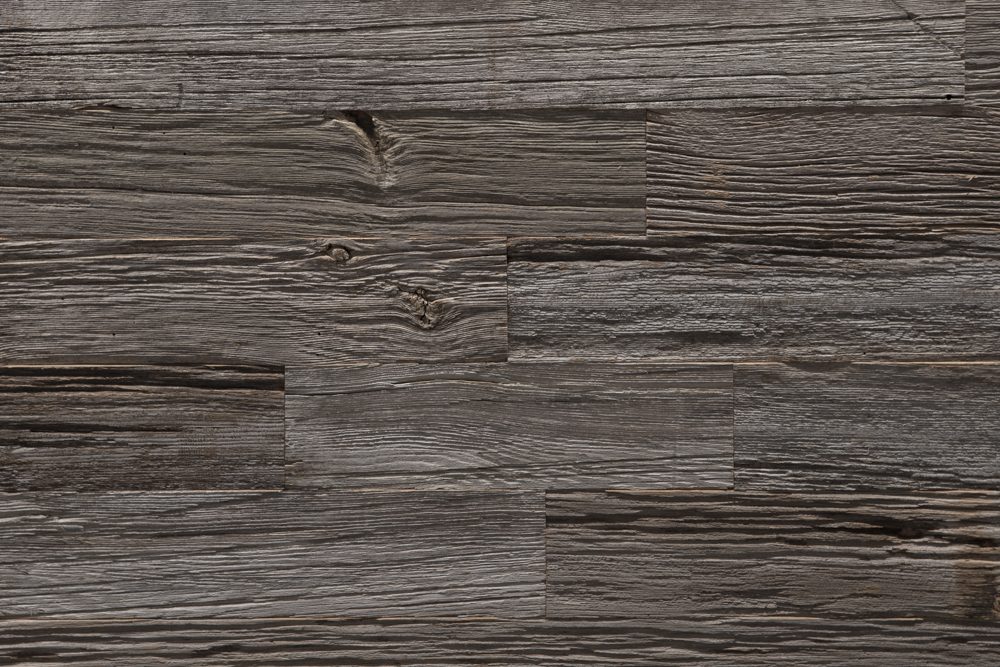
Chemical treatment. Industrial salvage like railroad ties and utility poles was soaked in creosote or other preservatives that have no place inside a house. Barn siding and framing is a different category. Farmers left it bare and let it weather, which is where the grey and brown patina comes from in the first place.
Moisture and rot. Wood stored on bare ground can carry mold or soft, punky rot. A sound board feels dry and light for its size and stays firm when you press a thumbnail into it.
How to tell a safe board from a risky one
You can screen almost every risk with a two-minute inspection:
- Ask where it came from. A supplier who dismantles the buildings can tell you the source. If the answer is vague, keep shopping.
- Check for fresh insect powder. Empty nail holes and old beetle tracks are fine. Fine pale dust in or below the holes is not.
- Reject painted boards unless the seller can document lead testing.
- Press for soft spots. Punky, spongy areas mean rot got in. Solid boards resist a fingernail.
- Smell it. Sound barn wood smells like dry wood. A musty or tar-like odor is a red flag for mold or chemical treatment.
Kiln drying is worth asking about too. It is the most reliable way to kill insects in salvaged wood and drop moisture for interior use. Dry, century-old boards from a known source that pass the inspection above are also safe. If a supplier can offer neither a known source nor any prep process, that is your answer.
What we do at East Coast Rustic before a board ships
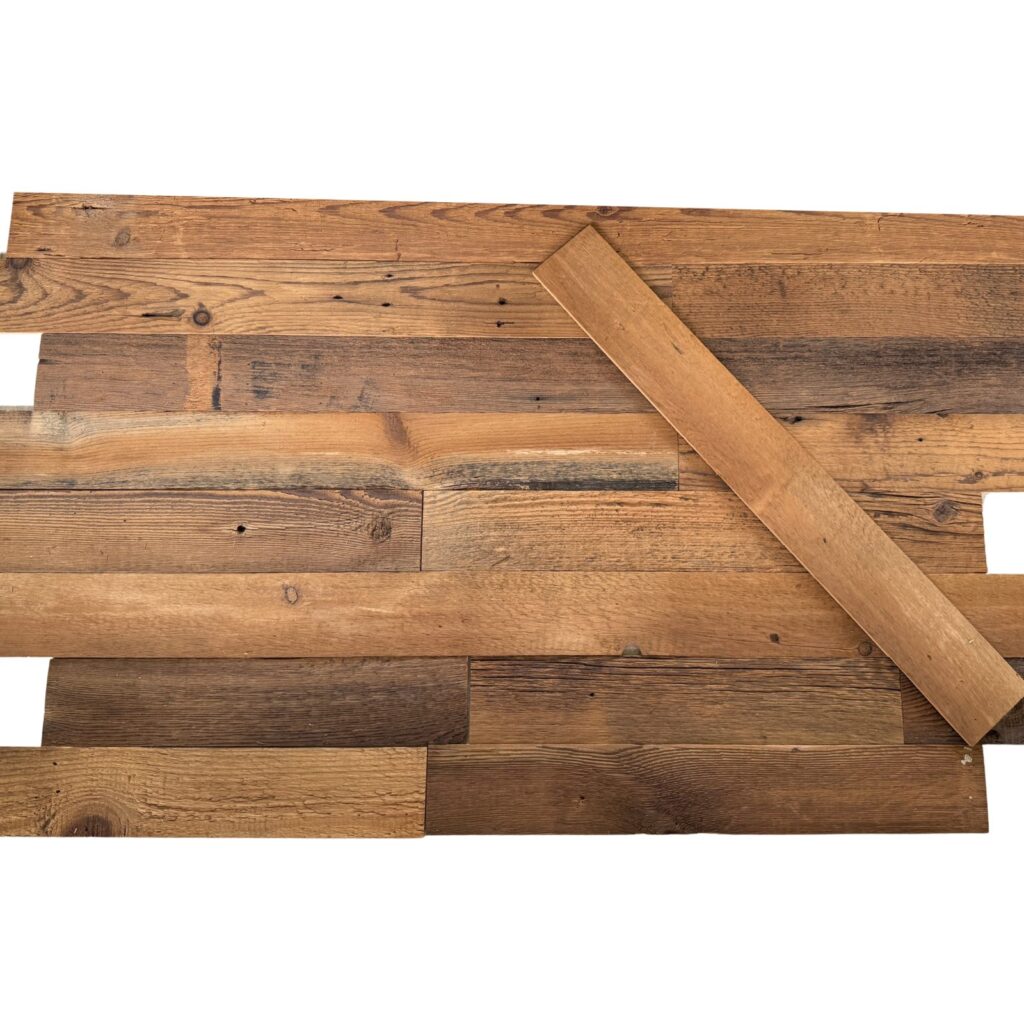
We take down the barns ourselves, most of them more than 100 years old, so we know each board’s history from the wall it came off to the box it ships in. Every plank is denailed and cleaned, then inspected by hand, then milled to consistent 3.5 inch or 5.5 inch widths in random lengths up to 48 inches so it installs flat and tight. Both color lines get the same treatment: warm brown reclaimed barn wood planks and the weathered grey line. Boards that fail inspection never make it into a box.
That process has held up across more than 1,100 orders shipped to US homes and businesses, including installs for Gordon Ramsay’s productions, the Baltimore Ravens, ESPN, and Starbucks. The same wood going into commercial projects with strict standards is what arrives at your door.
Do you need to seal reclaimed wood indoors?
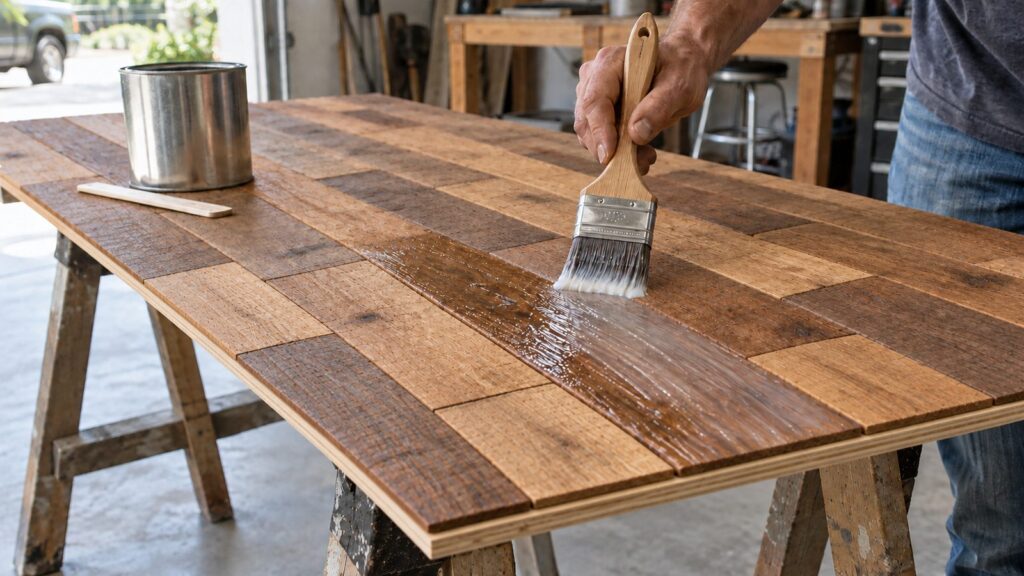
For a standard accent wall, no. The dry, weathered surface is the look you paid for, and clear coats can flatten it. Two exceptions are worth a coat of matte water-based polyurethane: splash zones behind a kitchen sink or stove, and high-touch spots like a stair wall where hands rub the boards daily. Everywhere else, an occasional pass with a vacuum brush attachment is all the maintenance the wall needs.
Frequently asked questions
Can reclaimed wood bring bugs into your house?
Only if the wood carries a live infestation, which shows up as fresh, flour-like powder around small exit holes. Old empty holes are harmless character. Buy from a supplier who inspects each board, and give any board a once-over yourself before it goes on the wall.
Is reclaimed barn wood safe for bedrooms and kids’ rooms?
Yes. Unpainted, cleaned barn wood is solid wood with no added adhesives or factory finishes to off-gas. It is one of the more inert wall materials you can install in a sleeping space.
What about lead paint on old wood?
Lead is only a concern on wood that was painted before 1978. Unpainted barn boards carry no paint at all. If you salvage painted wood on your own, never cut or sand it indoors without testing it first.
Does reclaimed wood have to be kiln dried to be safe?
Kiln drying is the surest way to kill insects and lower moisture, and it is a fair question to ask any seller. Boards from a known, dry source that pass the hands-on inspection described above are also safe for interior walls.
Related reading
- Reclaimed Wood Paneling: What It Is, What It Costs, and How to Choose
- Reclaimed Wood vs Engineered Wood Panels
- Where Our Wood Comes From
- DIY Accent Walls: Start Here
Ready to put real barn wood on your wall?
Every board we sell started as part of a barn that stood for over a century, and every board is cleaned and inspected before it ships. Browse the 3.5 inch brown reclaimed wood planks, priced per square foot, or explore the full range of brown and grey on the DIY walls page.