Sale
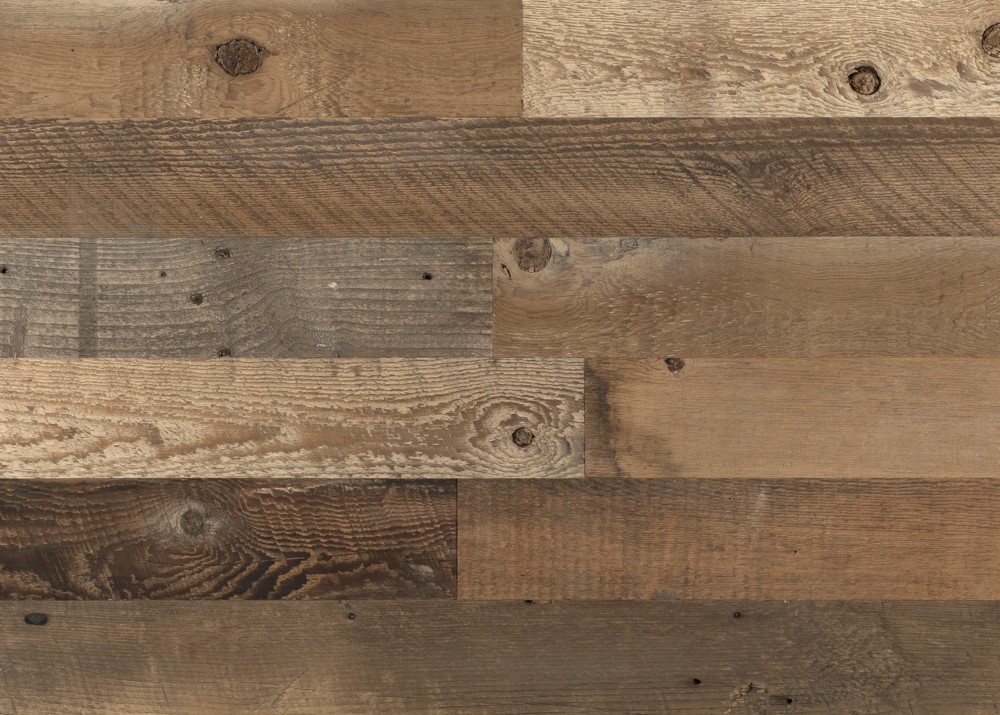
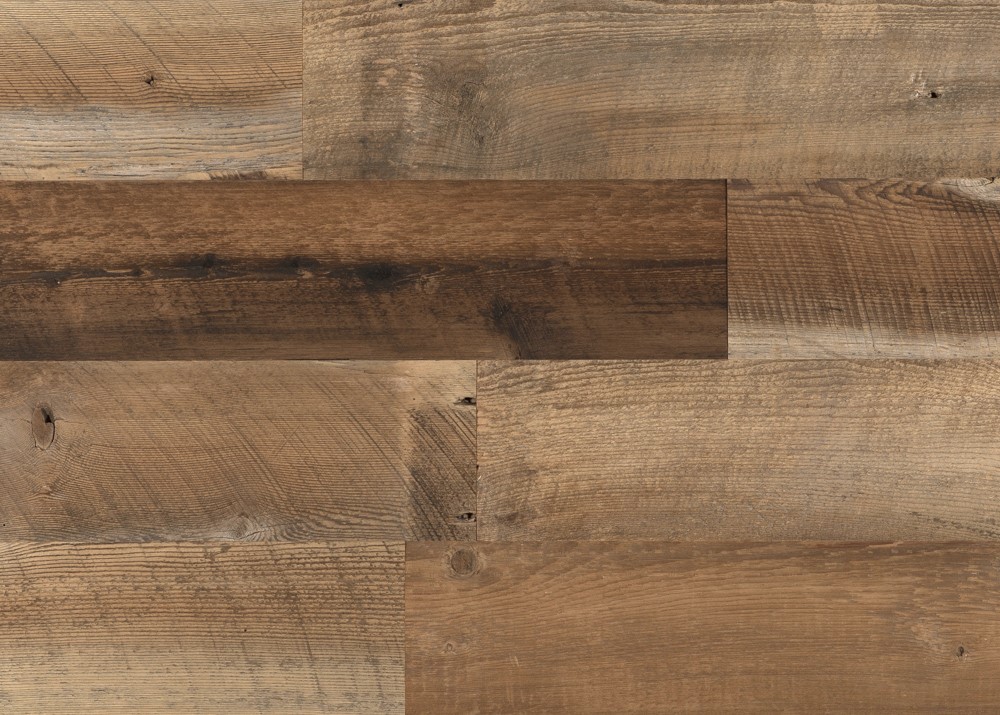
3.5″ Plank · Brown Natural
Brown Reclaimed Barn Wood
Warm brown tones with rich natural grain. Our most popular plank for cozy spaces.
$10.25$11.75/ sq ft
20 sq ft box · $205.00
Shop 3.5″ Brown →Every plank we ship was pulled from an American barn over 100 years old. The saw kerf marks, original nail holes, and weathered patina aren’t printed on — they’re the actual history of the board. That’s why our ceilings read as authentic from the first walk-in, not as a faux veneer that looks plastic up close.
Each box of planks ships hand-selected for color and width variation — random short lengths up to 48 inches that install in a brick-pattern stagger. It’s the same product hanging in Gordon Ramsay’s Hell’s Kitchen, the Baltimore Ravens NFL studio, and hundreds of Starbucks locations.
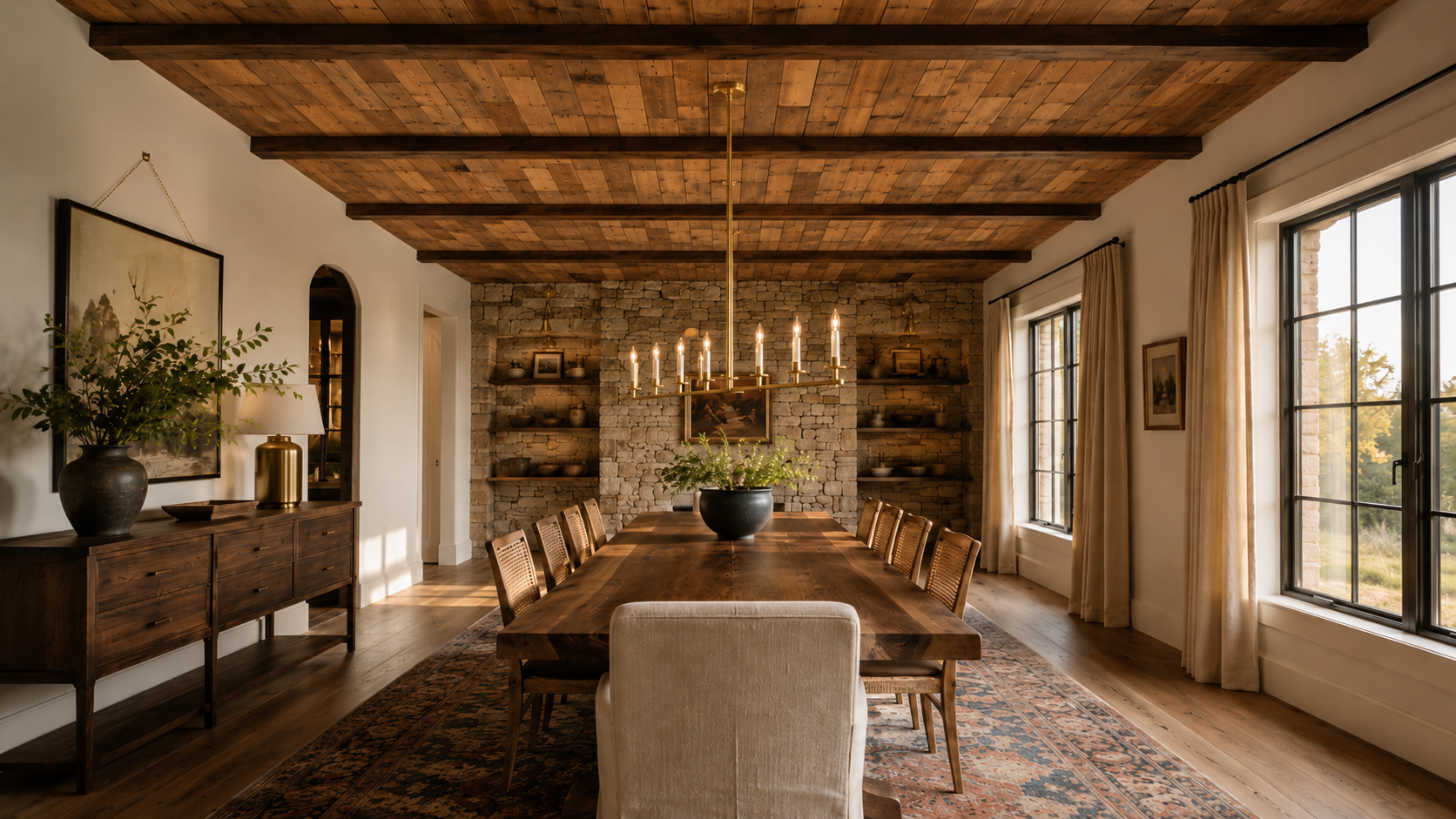
Most ceilings use one color, not a mix. Pick the look that fits the room you’re building.
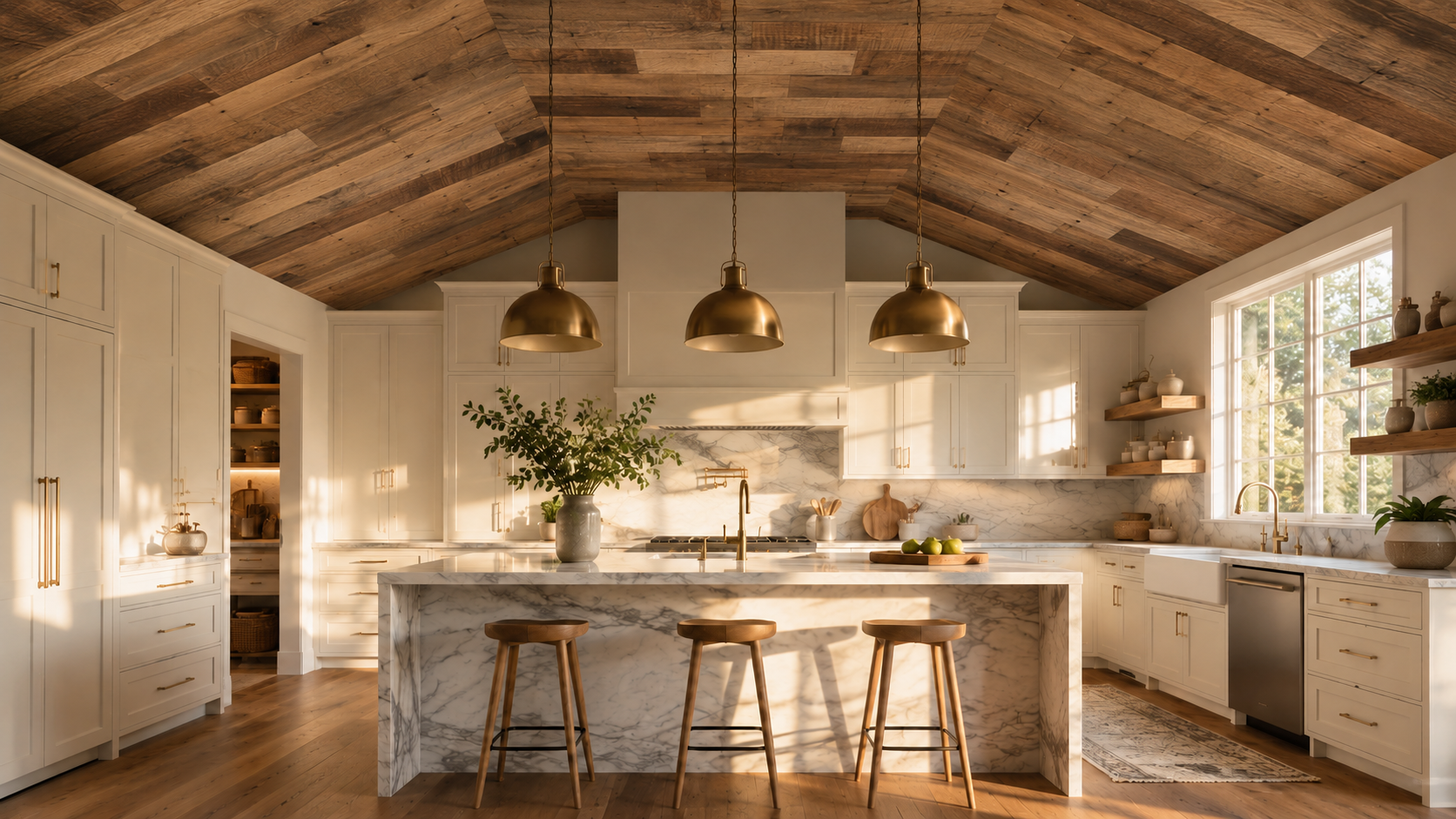
Walnut, honey, and tan tones. Right at home in kitchens, bedrooms, basements, and any space you want to feel timeless and lived-in.
Shop Brown →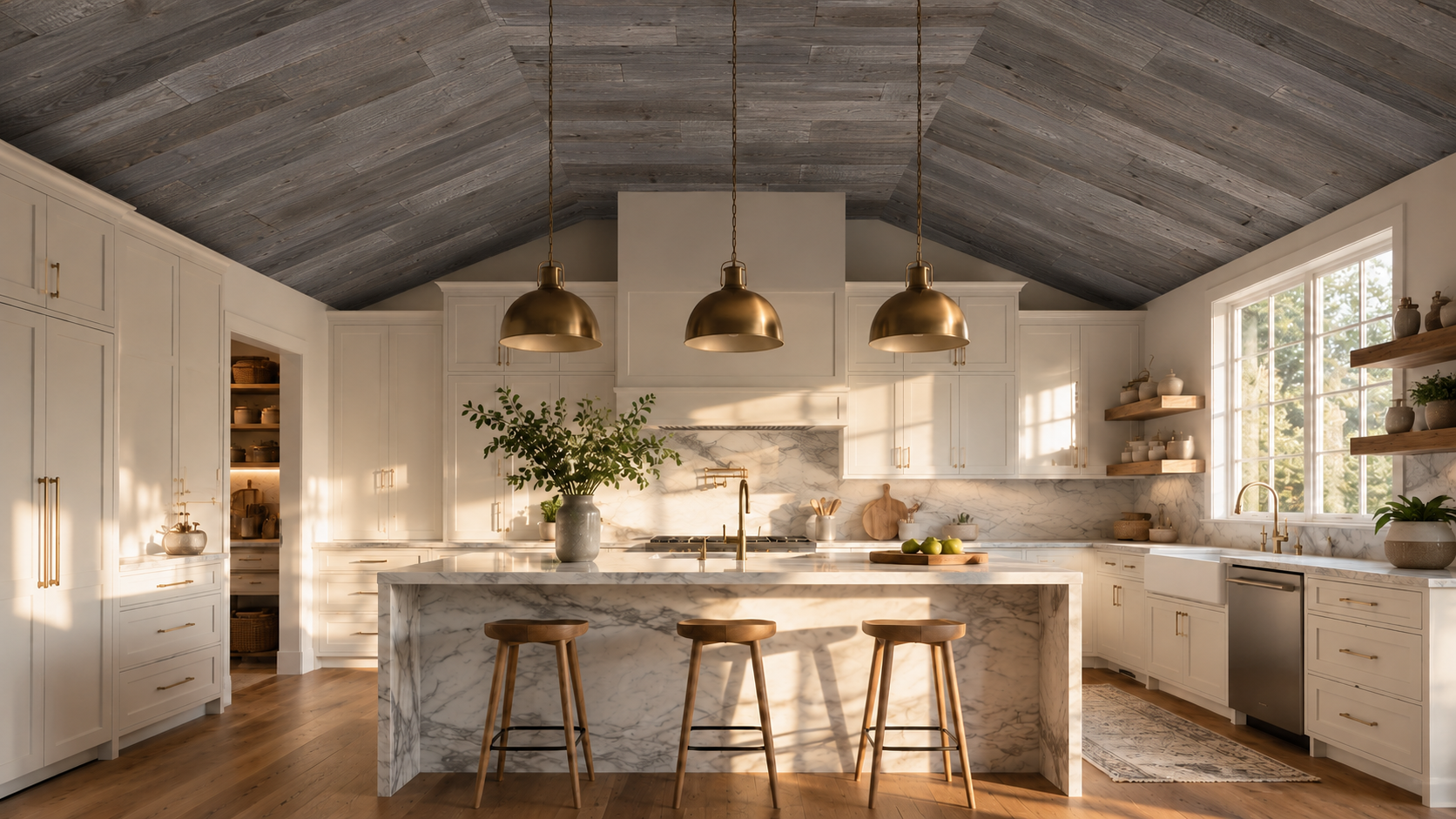
Silver, charcoal, and driftwood greys. Pairs beautifully with white walls, marble, and modern fixtures — the choice for spa baths, vaulted living rooms, and contemporary spaces.
Shop Grey →The same 4 products that build accent walls install on ceilings. Pick a color and a plank width, enter your square footage, done.
Warm brown tones with rich natural grain. Our most popular plank for cozy spaces.
Wider boards, fewer seams, more dramatic statement. Same authentic barn wood character.
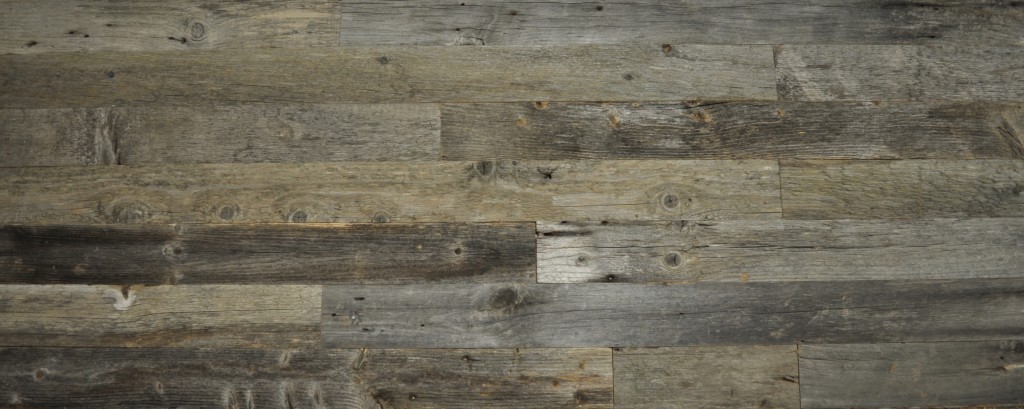
Weathered silver-grey patina. Perfect for modern, coastal, or industrial interiors.
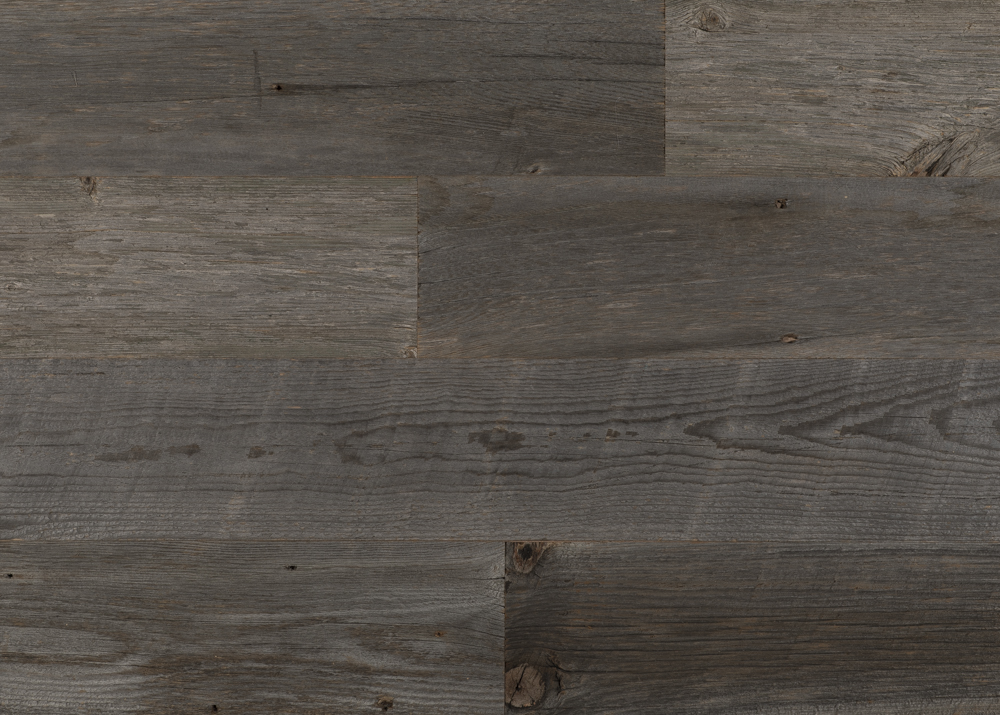
Bigger boards in our weathered grey. Cleaner lines, fewer seams, premium finish.
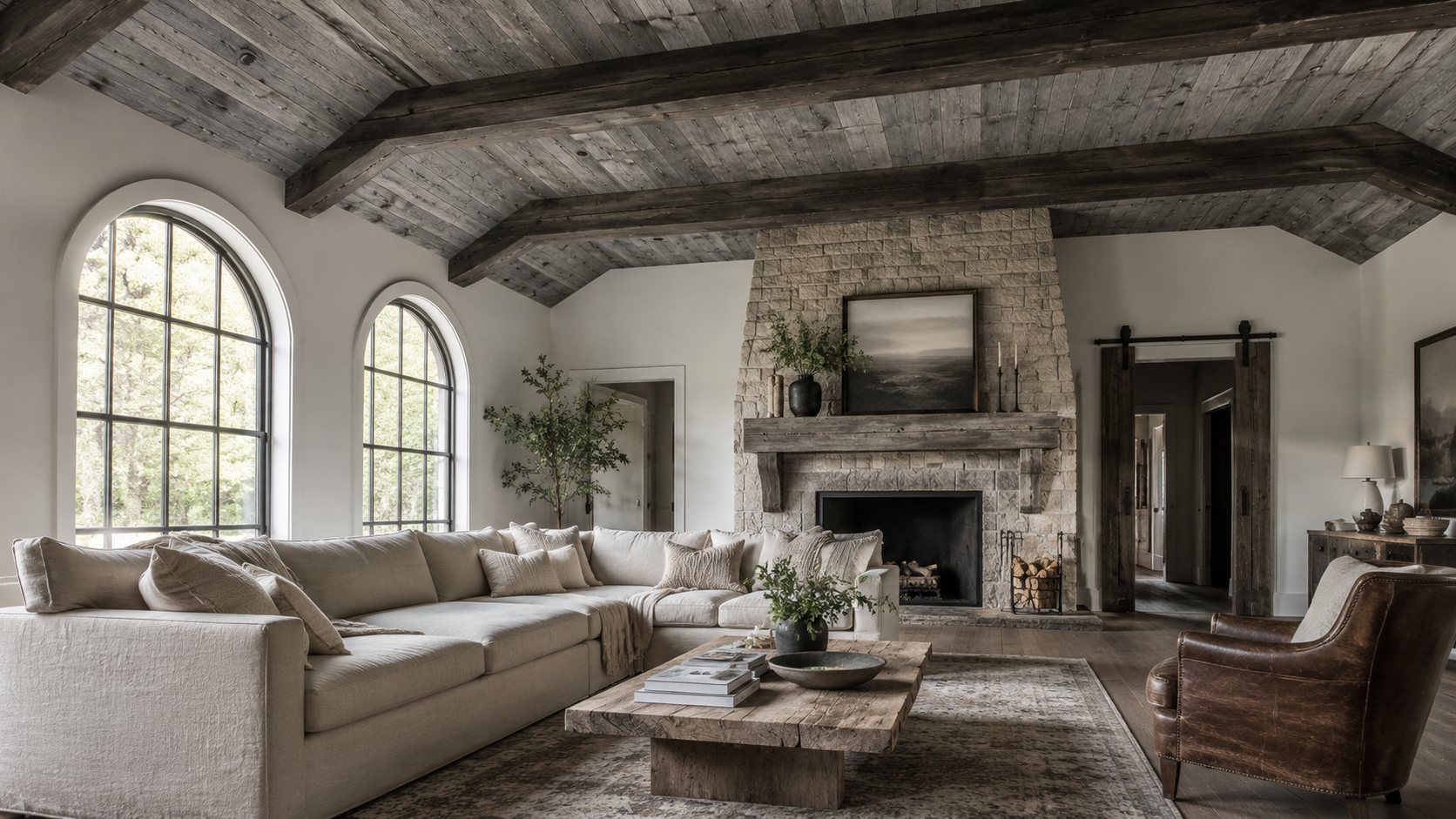
The same planks work on vaulted, sloped, flat, and beam-divided ceilings. A few real-world looks below.
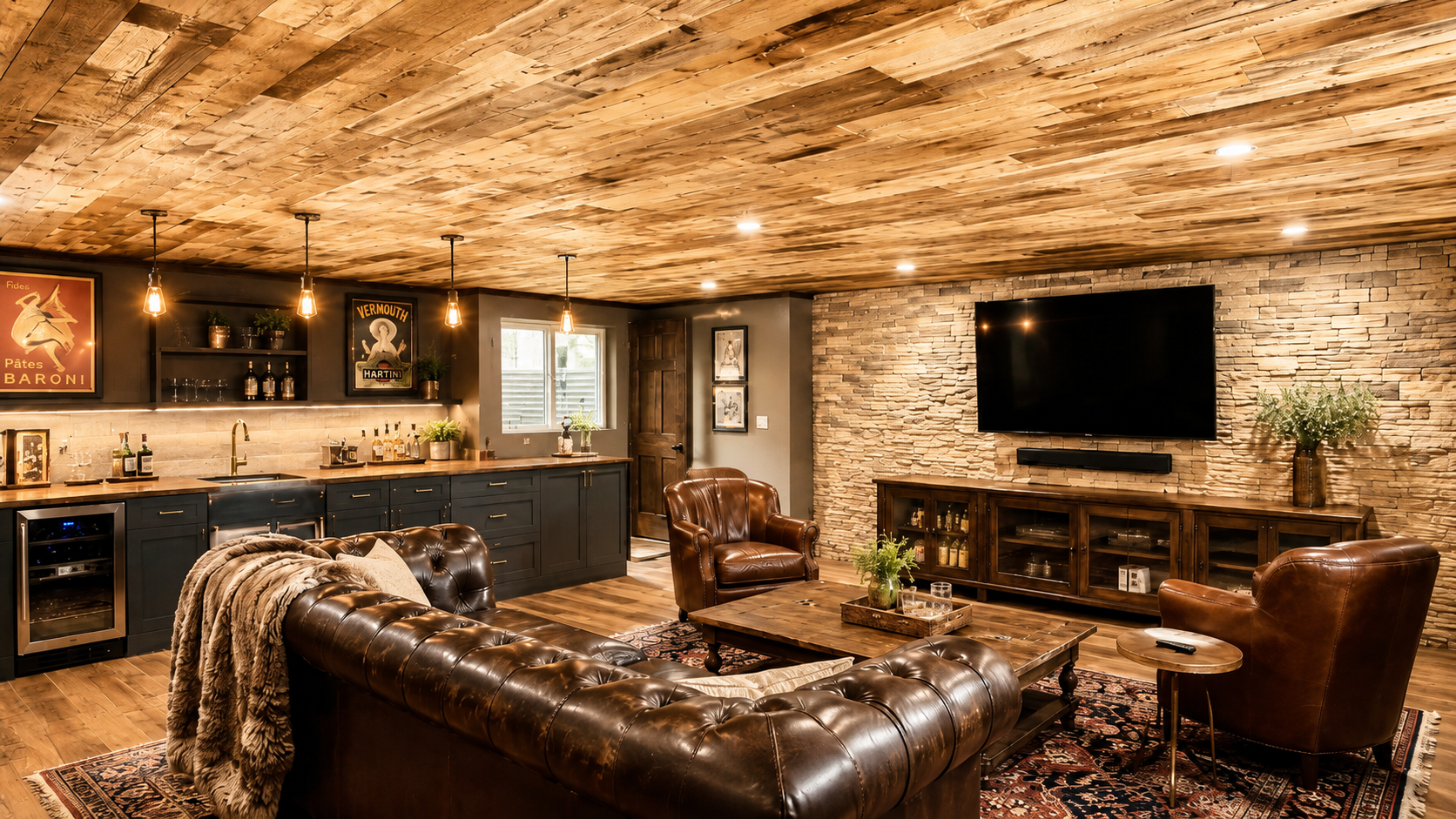
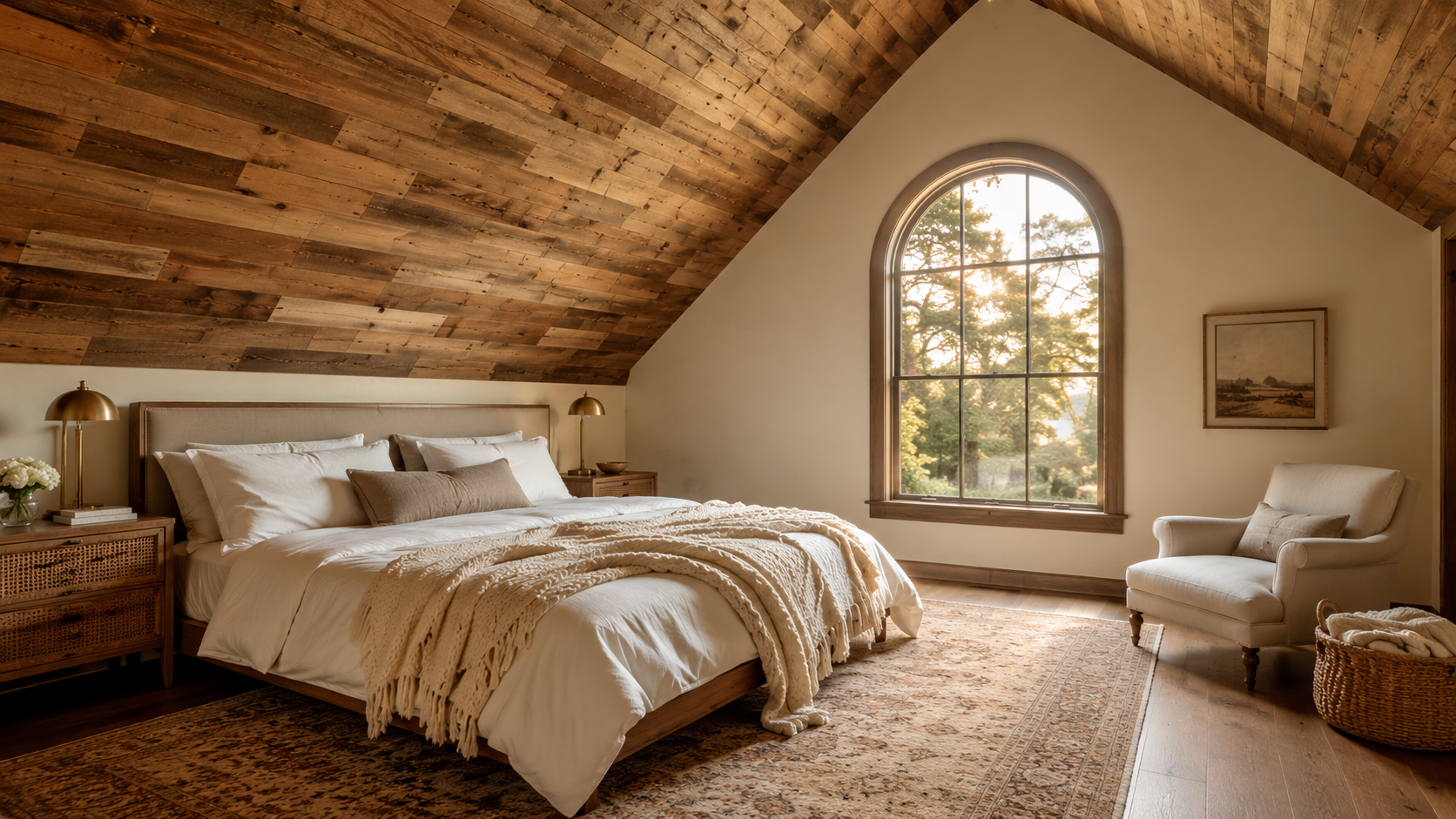
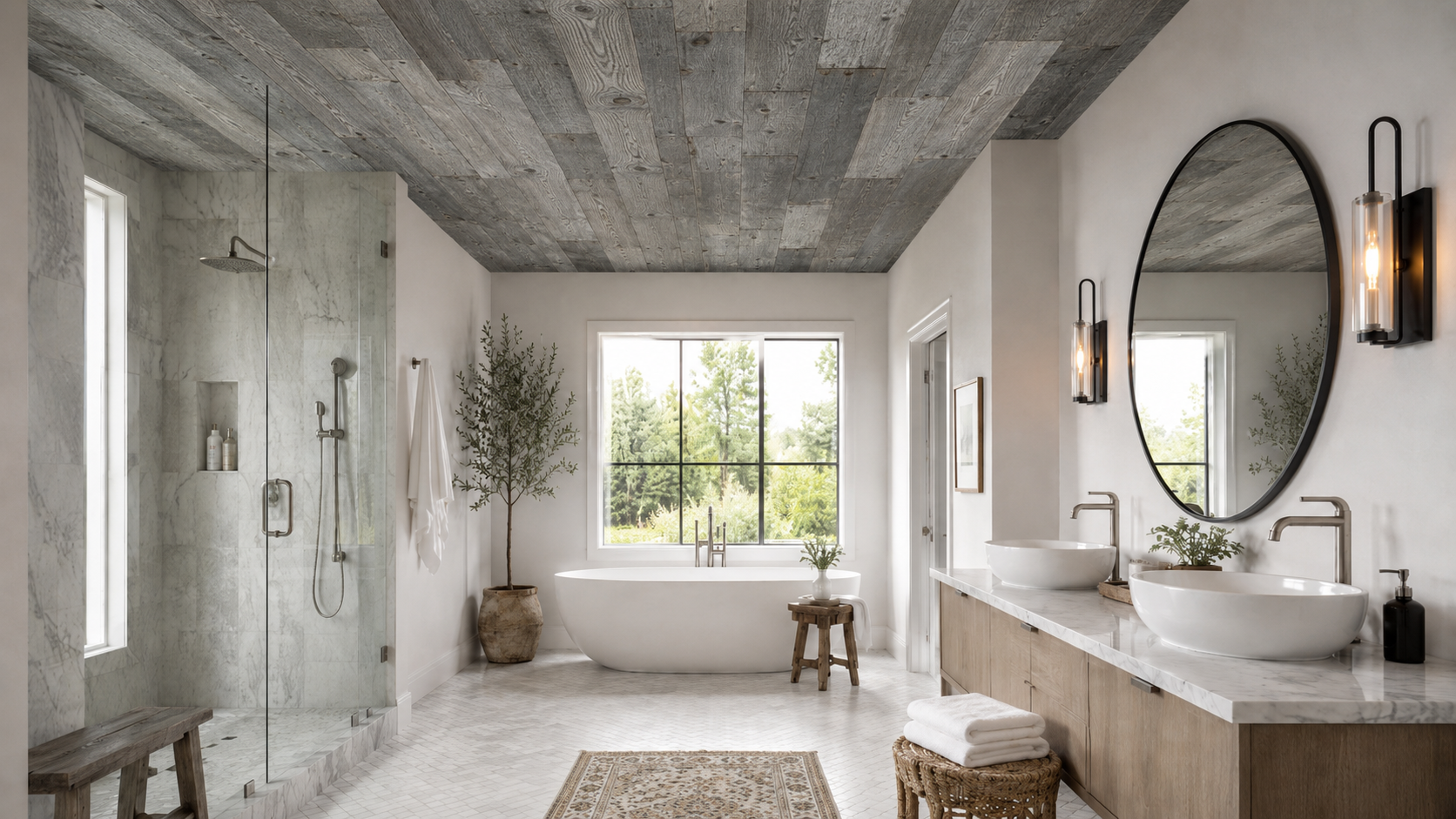
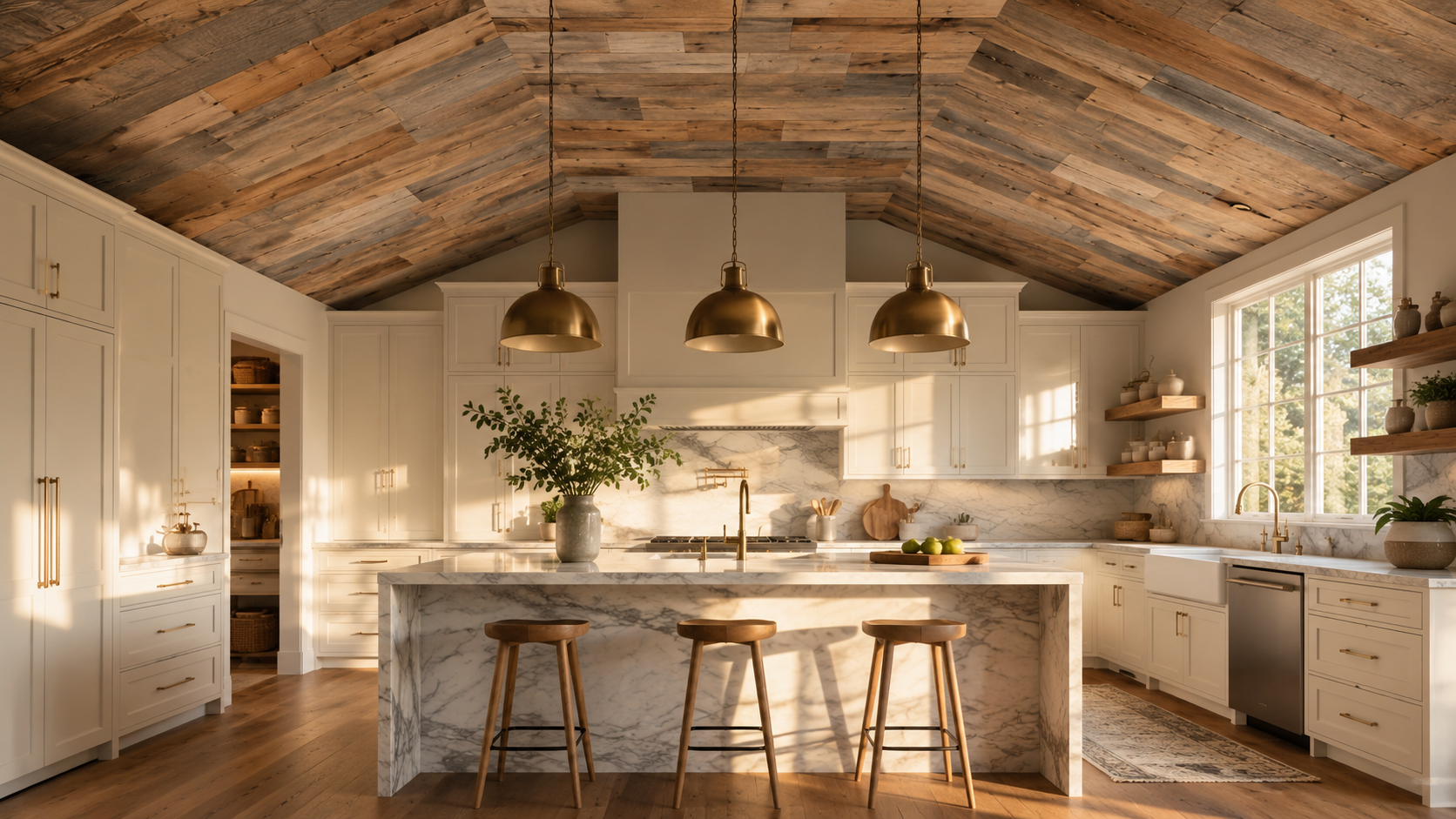
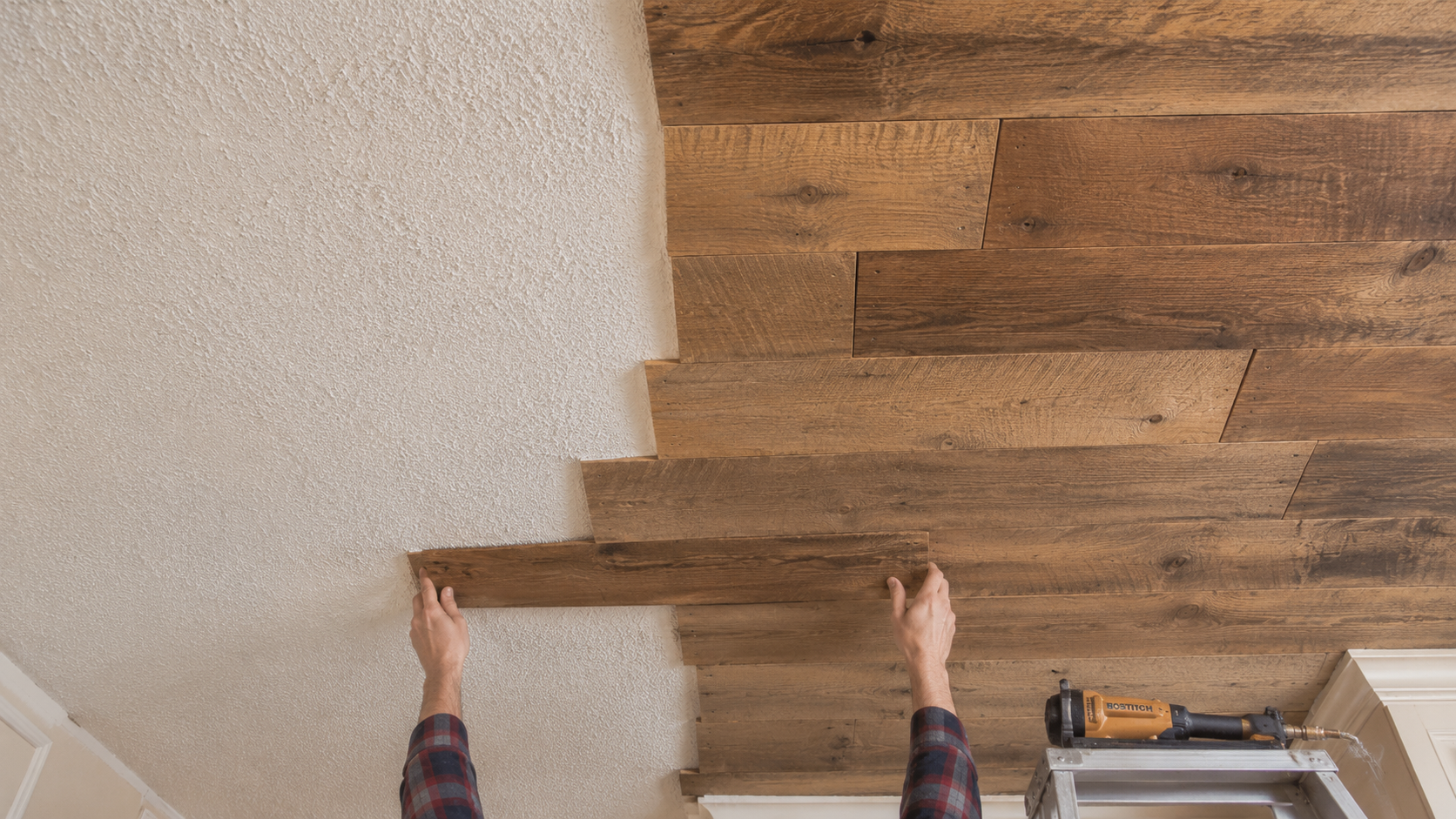
One of the most common questions we get. The answer is yes: at 3/8″ thick, our planks are light enough to nail or construction-adhesive directly through a popcorn texture into the joists or furring strips. No scraping, no skim-coating, no demo dust.
Most homeowners cover an 8×10 ft ceiling section in an afternoon with a finish nailer and a stud finder. The brick-stagger pattern hides any subtle ceiling unevenness, and the weight is well within the load tolerance of standard residential drywall and joists.
Pricing is per square foot — the same per-sqft rate whether you’re covering a 60 sq ft bathroom ceiling or a 400 sq ft vaulted living room. Three quick examples to size your project:
3 boxes (20 sq ft each)
9 boxes (20 sq ft each)
20 boxes (20 sq ft each)
Free shipping on orders over $200. Order 10% extra to account for cuts — better than running short mid-install. See full cost breakdown →
If you can use a finish nailer and a stud finder, you can install a wood ceiling in a weekend.
Use a stud finder to mark every ceiling joist or furring strip. Snap a chalk line if it helps. The planks nail directly into these.
Start at one wall and work outward. Cut the first plank of each row to a different length so the seams stagger like brick — no two seams in a column.
Apply construction adhesive to the back of the plank and shoot two or three finish nails through the face into the joist. Repeat across the ceiling.
Leave a small, even shadow gap along the wall edges so the cut ends read as intentional. Stand back, take a photo, send it to us — we love seeing finished installs.
Six things customers ask before they buy. If you don’t see your question, drop us a note.
Yes. At 3/8″ thick, our reclaimed wood planks are light enough to nail or construction-adhesive directly through a popcorn texture into the joists or furring strips. There’s no need to scrape, sand, or skim-coat the popcorn first — the planks cover it completely, and the brick-stagger install pattern hides any subtle texture variation underneath.
Material cost is per square foot, and the same rate applies whether you’re covering 60 sq ft or 400 sq ft. A small spa bathroom (~60 sq ft) takes 3 boxes; a kitchen or primary bedroom (~180 sq ft) takes 9 boxes; a full vaulted living room (~400 sq ft) takes about 20 boxes. We recommend ordering 10% extra to account for cuts. Most homeowners save 50–70% by installing themselves rather than hiring a contractor.
Not the way most people fear. A reclaimed wood ceiling adds visual warmth and texture, which can make a room feel cozier — but it doesn’t reduce the perceived height of a standard 8′ or 9′ ceiling. In vaulted rooms, it actually emphasizes the height. Choose grey planks for a lighter, airier feel; brown planks for warmth and intimacy.
Reclaimed barn wood is one of the best choices for ceilings: it’s lightweight, kiln-dried over decades naturally, dimensionally stable, and the random plank lengths cover irregular ceiling surfaces well. Engineered planks and faux peel-and-stick products tend to read as plastic up close. Solid pine boards work but they’re heavier, knot-prone, and don’t carry authentic patina.
The basic install is: find your joists with a stud finder, start at one wall, stagger the seams like a brick wall (cut a different starting length for each row), apply construction adhesive to the back of each plank, then shoot two or three finish nails through the face into the joist. Most homeowners finish an 8×10 ft section in an afternoon. No specialty tools required — a finish nailer, a circular saw or miter saw, a stud finder, and a level are enough.
No — reclaimed wood ceilings have been a defining detail of modern farmhouse, organic modern, coastal, and Scandinavian interior design for the last decade and remain a top request in current design publications. The key difference between a dated ceiling and a current one is plank format: short, staggered, randomly varied planks (like ours) read as fresh and authentic. Uniform tongue-and-groove pine planks running the full length of the room are what reads as dated.