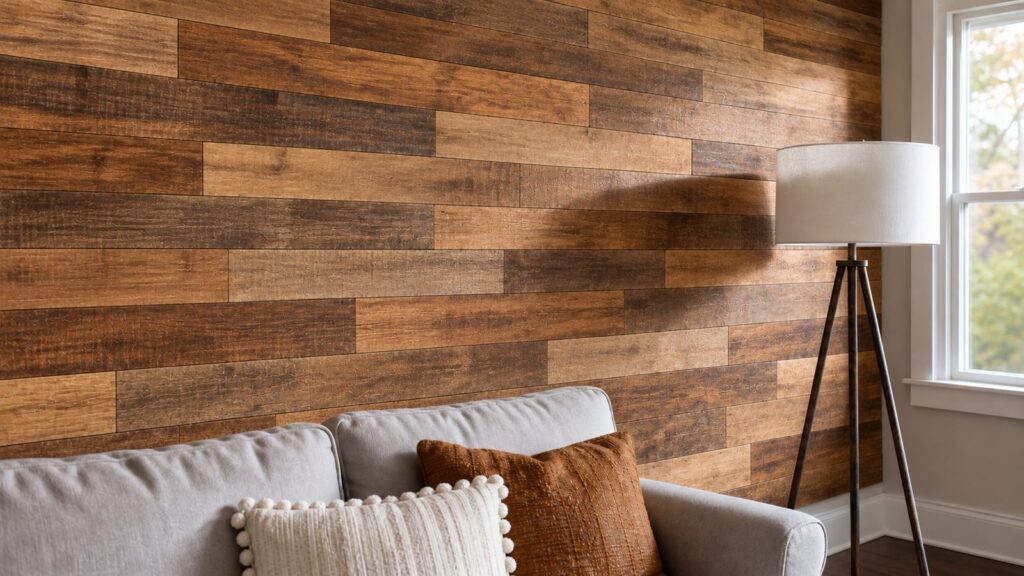
Reclaimed wood planks for walls come in two very different forms: solid boards salvaged from old buildings, and thin veneer strips with adhesive backing. The two look similar in product photos and nothing alike on an actual wall. This guide covers what to check before you buy, including board thickness, plank widths and lengths, the two color families, and the simple math for figuring out how many square feet to order.
Check the thickness first
Thickness is the fastest way to separate real reclaimed planks from imitations. Solid reclaimed boards run about 3/8 inch thick. Budget wall products are often 1/8 inch veneers, thin slices of wood mounted on adhesive strips. They go up fast, and that is where the advantages end.
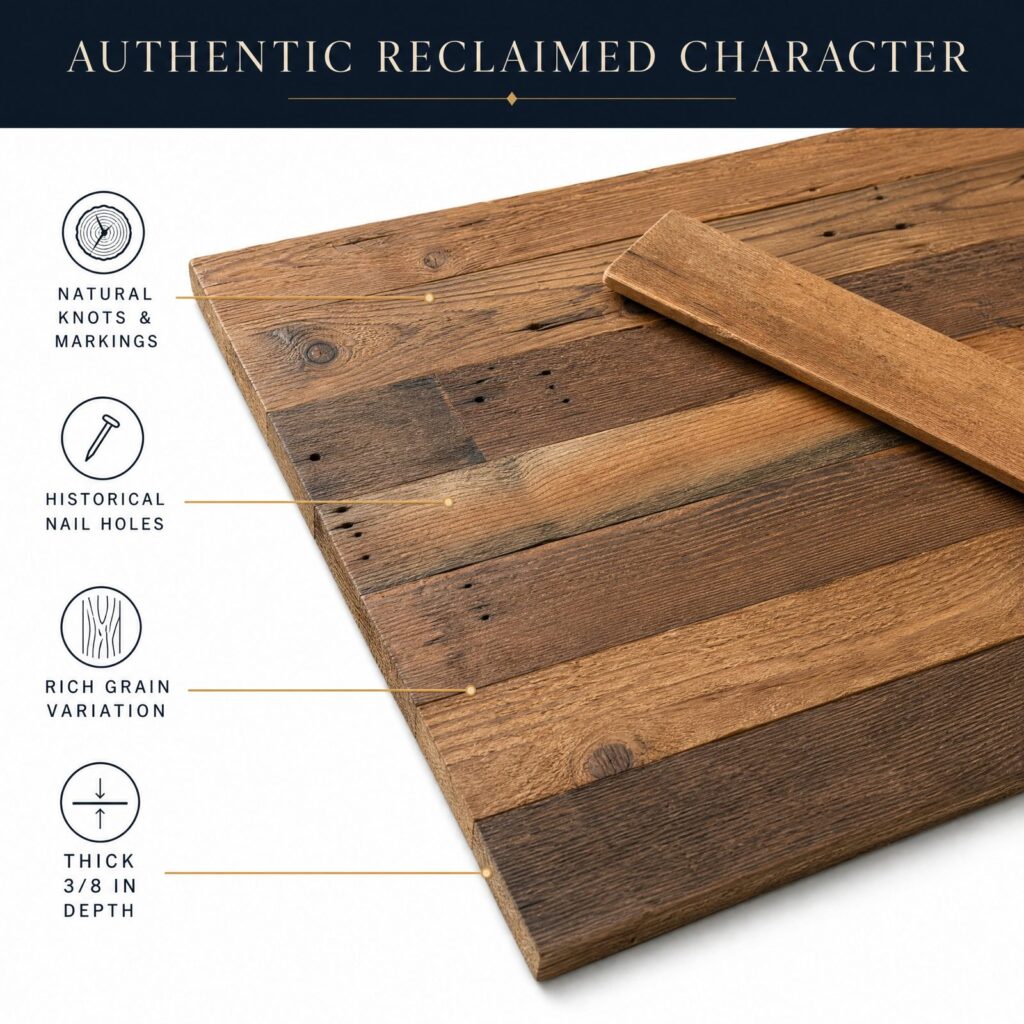
A 3/8 inch solid plank casts real shadow lines at every seam, which is what gives a plank wall its depth. The nail holes and saw kerf marks go all the way through the board because a saw actually cut it a century ago. Solid planks also bridge small dips and bumps in drywall, while thin veneer telegraphs every flaw in the surface underneath. If a listing does not state the thickness, that is usually the answer.
Every board we mill at East Coast Rustic comes off barns that stood for more than 100 years, and our reclaimed barn wood planks are solid wood at roughly 3/8 inch thick. More than 1,100 orders have shipped that way, including installs for Gordon Ramsay and the Baltimore Ravens broadcast studio.
Widths and lengths that look right on a wall
Reclaimed wall planks are typically sold in 3.5 inch and 5.5 inch widths. The narrower boards read as busier and more detailed, a good fit for smaller walls and bedrooms. The 5.5 inch boards give larger walls a calmer, more open pattern. Pick one width per wall so the grid stays orderly.
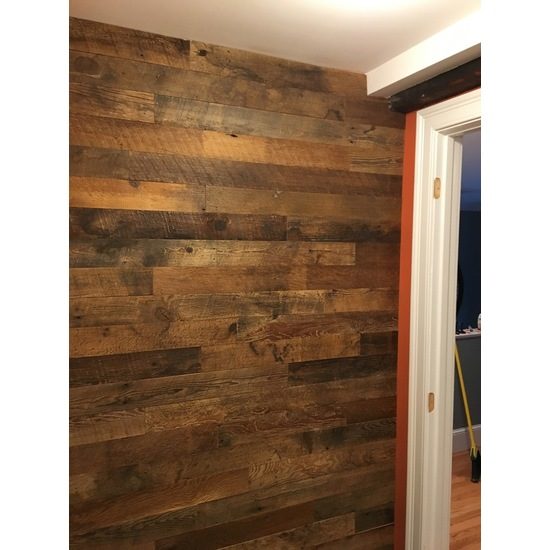
Length matters just as much. Authentic reclaimed planks come in random lengths, capped at about 48 inches, because that is how usable sections come off a real barn. Long unbroken 8 foot runs usually mean new lumber that was distressed at a factory. Those random short boards are what create the staggered, brick-style seam pattern people picture when they think of a barn wood wall, so treat them as a feature rather than a compromise.
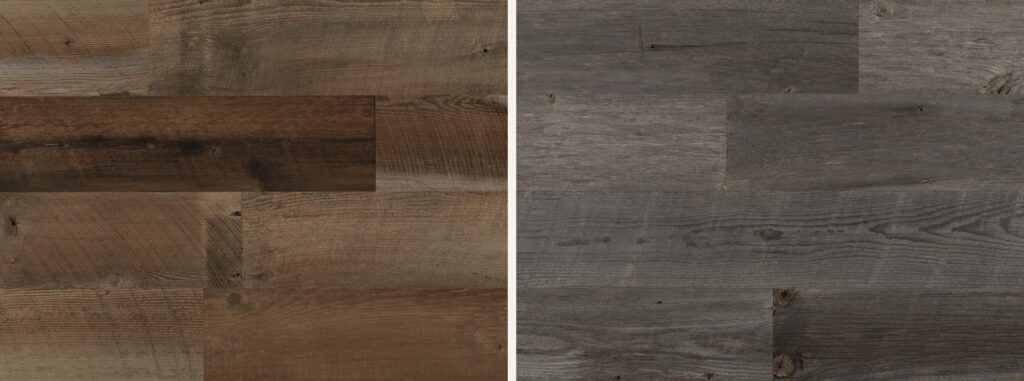
Brown and grey are both real barn wood
Reclaimed barn boards weather into two color families. Brown planks, in mixed tones of walnut, honey, and tan, typically come from the sheltered side of the structure. Grey planks earned their charcoal and silver tones from decades of direct sun and rain. Both are authentic, and the right pick comes down to the room: brown warms up a space, while grey suits calmer, modern palettes. Our grey design guide walks through full room palettes. One rule holds either way: choose a single color line per wall, since mixing brown and grey boards in one install looks patchy rather than rustic.
How many square feet to order
The coverage math takes about a minute:
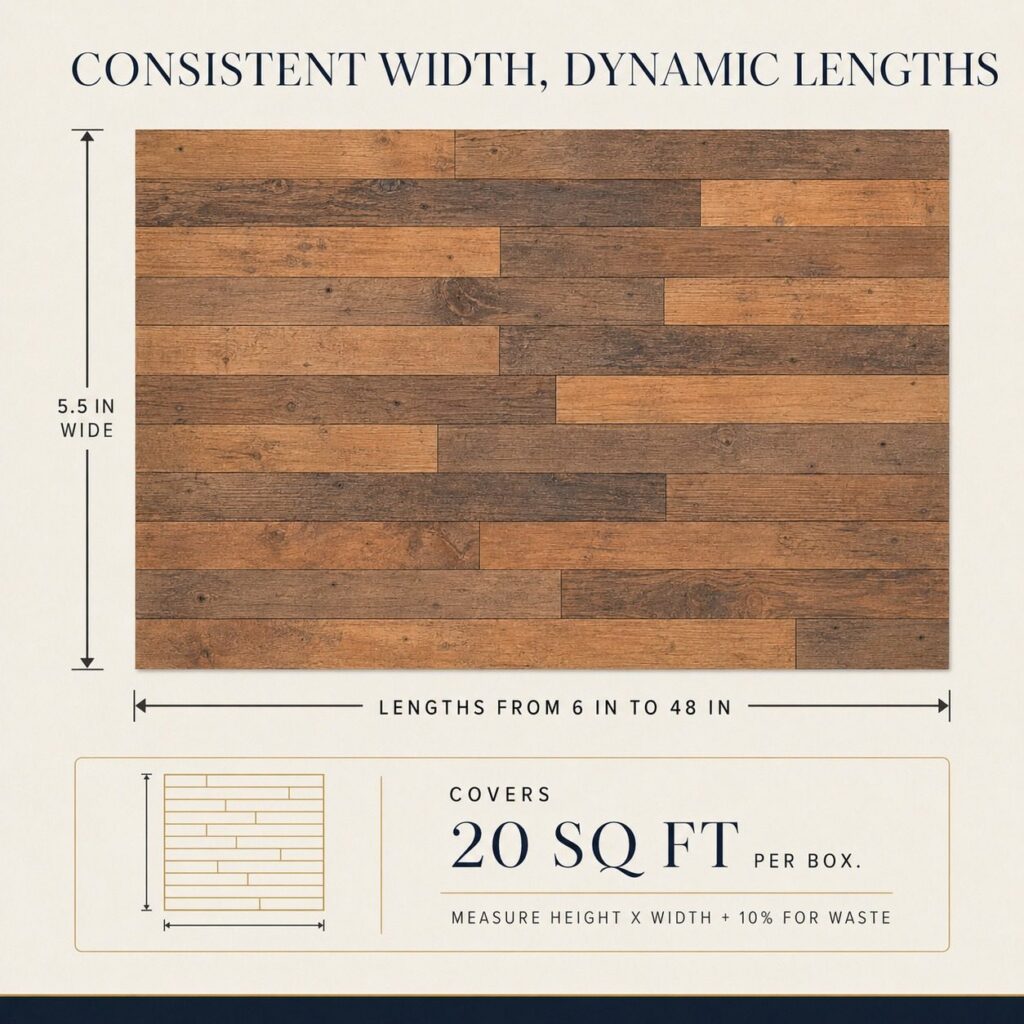
- Multiply wall width by wall height in feet. A 10 foot wide wall with 8 foot ceilings is 80 square feet.
- Add 10 percent for end cuts and trimming around outlets. That brings the example wall to 88 square feet.
- Round up to full boxes. Our planks ship in 20 square foot boxes, so this wall needs 5 boxes, or 100 square feet.
Leftover boards are worth keeping. They let you swap a plank later or wrap a shelf to match the wall. Solid reclaimed planks are priced per square foot, with the 3.5 inch brown line at $10.75 per square foot, and shipping is free to the lower 48 states on orders over $200. A single box clears that threshold. For a full budget breakdown by wall size, see our accent wall cost guide.
Frequently asked questions
Are reclaimed wood planks solid wood or veneer?
Both exist on the market, which is why checking thickness matters. Peel-and-stick products are thin veneer strips. Authentic reclaimed planks, like the boards East Coast Rustic mills from 100+ year old barns, are solid wood about 3/8 inch thick.
What lengths do reclaimed wall planks come in?
Random lengths up to 48 inches. The mix of short and medium boards is what produces the staggered seam pattern, and it is also a sign the wood came off a real structure instead of a factory line.
How do the planks attach to the wall?
Construction adhesive straight onto painted drywall, with brad nails to hold boards while the adhesive sets. No special substrate is needed. Our installation guide covers the full process, and most accent walls are done in a weekend.
Do reclaimed planks need to be sealed?
Not for a typical living room, bedroom, or office wall. The patina is stable once the boards are cleaned and kiln dried. In kitchens or high-touch spots, a clear matte polyurethane adds wipeability without changing the color much.
Related reading
- Reclaimed wood paneling: what it is, what it costs, and how to choose
- How much does a reclaimed wood accent wall cost?
- How to install a reclaimed wood accent wall
- DIY reclaimed wood walls: all products and live pricing
Ready to see the wood in person?
The fastest way to judge reclaimed planks is to hold one. Browse our 3.5 inch brown reclaimed wood planks, priced per square foot and milled from barns that stood for over a century, and get a feel for what solid boards do that veneer cannot.