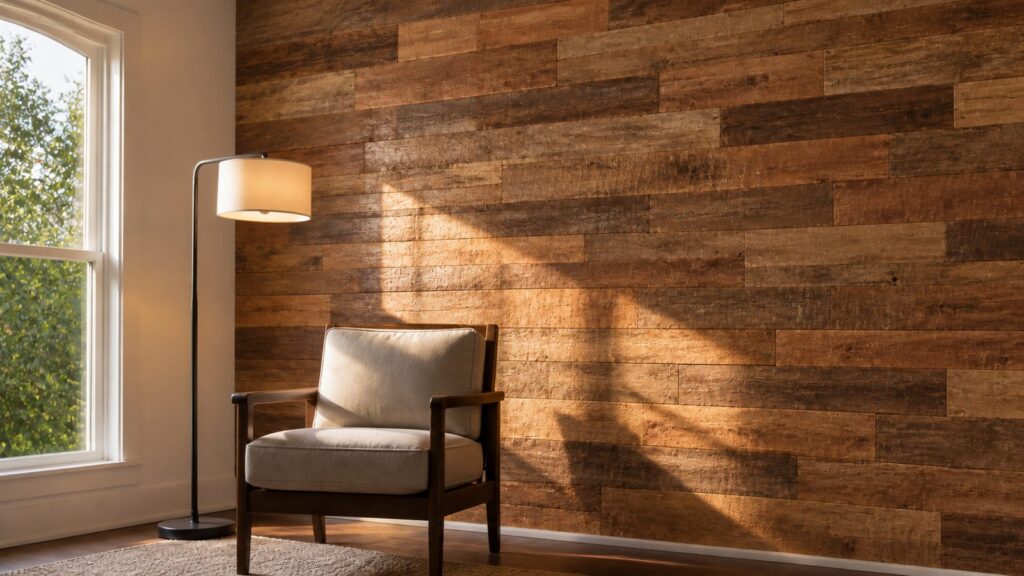
Distressed wood paneling is wall paneling that shows its age: nail holes, checking, saw marks, and color that shifts from board to board. There are two ways to get that look. A factory can fake it in a few minutes with wire brushes, chains, and stain. Or the wood can earn it over a century on the side of a barn. Both get called “distressed” in product listings, they don’t look the same on a wall, and they’re priced very differently. Here’s how to tell them apart before you spend money.
What “distressed” actually means
“Distressed” describes appearance, not origin. It’s a catch-all label that covers everything from printed MDF panels to genuine 100+ year old barn boards, which is exactly why it trips people up when they’re shopping.
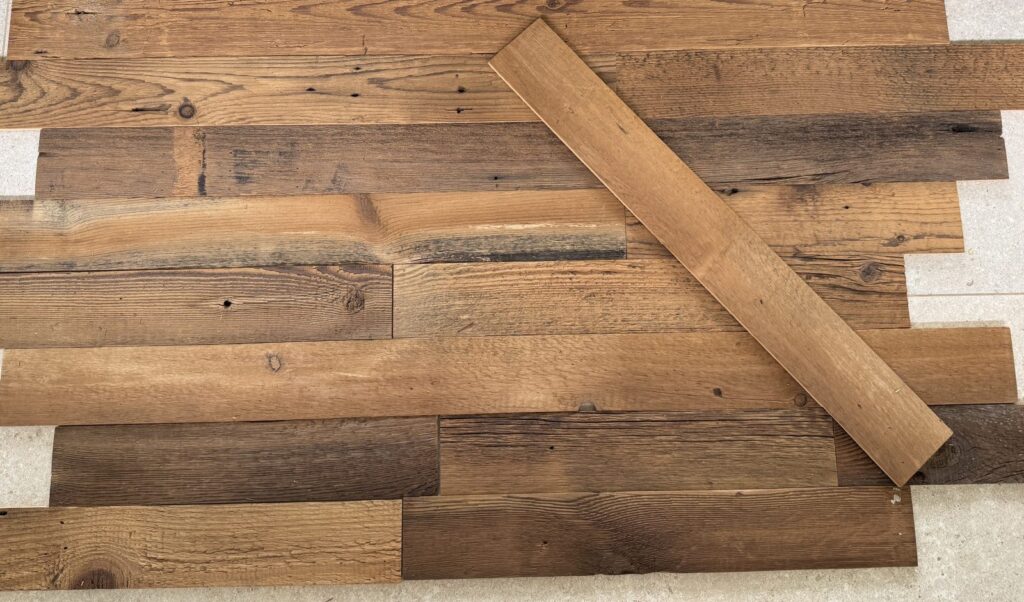
A few related terms are worth sorting out. Weathered wood means wood aged outdoors by sun, rain, and wind. Reclaimed wood means wood salvaged from an old structure. Real barn wood is both: it weathered on the barn for decades, then got reclaimed when the barn came down. Faux distressed paneling is neither. It’s new material processed to imitate the look.
If you want the full background on the real category, our guide to reclaimed wood paneling covers what it is, the styles available, and how to choose.
How factories fake age (and where it falls short)
Faux distressing is a real manufacturing process, and some of it is clever. New lumber gets wire-brushed to raise the grain, beaten with chains to add dents, then layered with stain and glaze to imitate patina. At the cheaper end, wood grain is simply photographed and printed onto MDF or a thin vinyl veneer, often with a peel-and-stick backing a few millimeters thick.
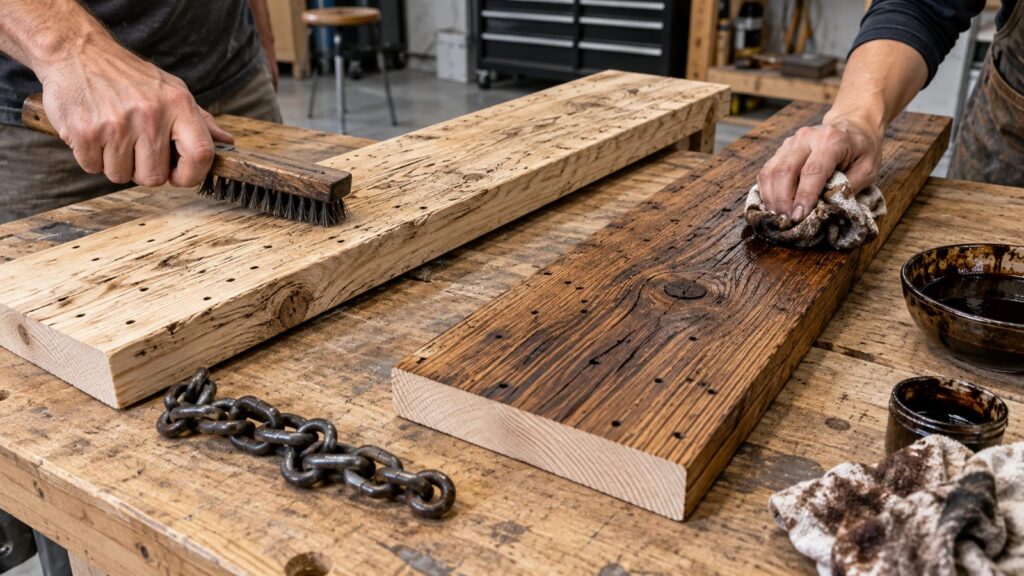
The problem is what can’t be manufactured. Sunlight breaks down wood fibers over decades and grays them well below the surface, so real weathered color goes deep. Stain sits on top. Sand through a faux board’s finish and you hit bright new wood immediately.
The other giveaway is repetition. Factory texture comes from a pattern, and on a wall of 60 or 80 boards, patterns repeat.
Real age doesn’t repeat.
Here’s the trap: faux panels photograph beautifully, because a product photo shows you four square feet. The repeats only become obvious once the wall is up, and by then you’ve already paid for it and spent a weekend installing it.
How to spot real weathered wood: a 60-second checklist
When you’re comparing distressed wood paneling online or holding a sample, look for these:
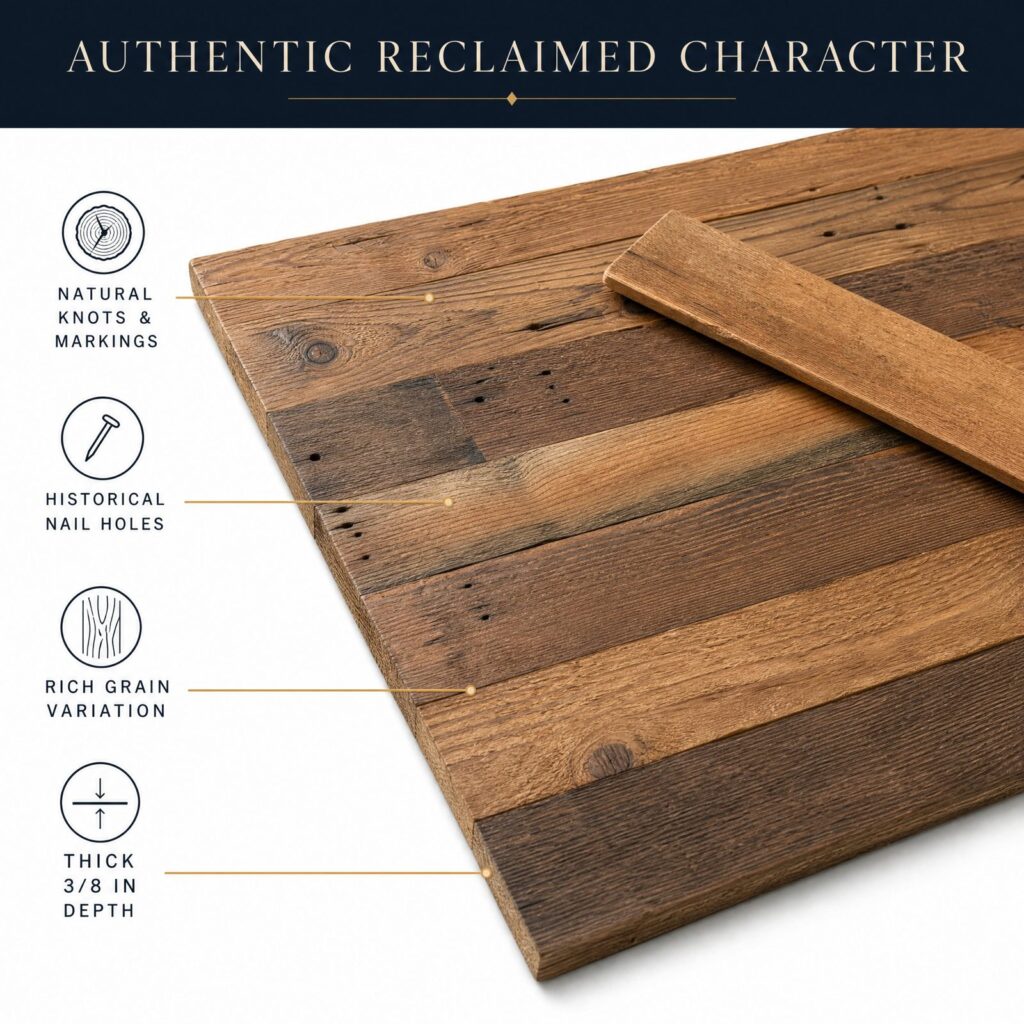
- Nail holes that go all the way through. Barn boards were nailed to a structure for a century. Faux “nail holes” are shallow surface dimples.
- Saw kerf marks. Old boards were cut on circular or straight blade mills, which leave arced or straight kerf lines you can feel.
- Checking at the ends. Real boards crack along the grain as they dry over decades.
- Honest thickness. Real reclaimed planks run about 3/8″ thick. Veneer products are often under 3mm.
- No two boards alike. Lay out ten boards. If you can find matching twins, it’s a printed or patterned product.
My honest take: if a listing won’t tell you the wood’s source or its thickness, that’s your answer.
What distressed wood paneling costs
Faux distressed panels are cheap because the material is cheap, and wire-brushed new lumber sits somewhere in the middle. Real reclaimed barn wood costs more because someone had to take down a barn, denail every board, clean it, and mill it into usable planks.

Our reclaimed barn wood planks run $10.75 per square foot, sold in 20 square foot boxes ($215 per box) with free US shipping on orders over $200, which a single box clears. Every board comes off barns that stood for 100+ years, in 3.5″ or 5.5″ widths and random lengths up to 48″. A typical 8′ x 12′ accent wall needs about 5 boxes. For full project math, see our accent wall cost breakdown.
That’s real money, so it’s fair to ask whether the difference shows. It does, and you’re in good company: Gordon Ramsay chose our wood for a home makeover for a Hell’s Kitchen winner, and we’ve shipped more than 1,100 orders to homeowners who made the same call.
Brown or grey: two directions for the weathered look
Real weathering produces two distinct palettes, and we sell both.
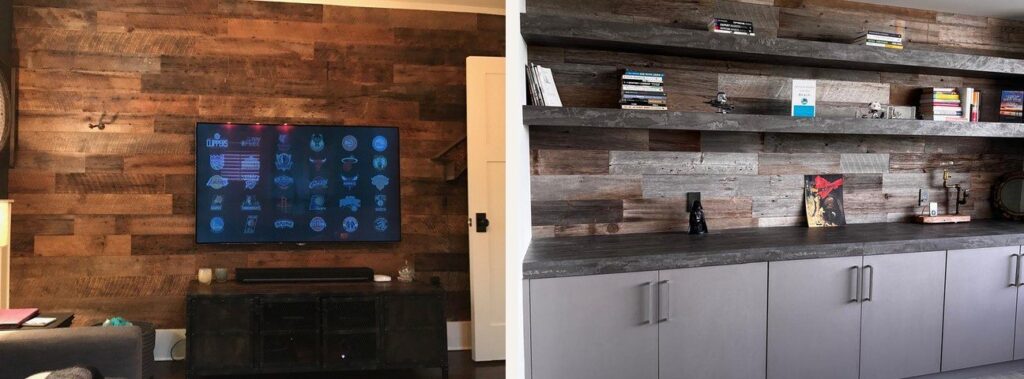
Brown boards come from more protected barn surfaces and carry warm walnut, honey, and tan tones. They read rustic and warm, and they’re the classic pick for living rooms and kitchens.
Grey boards took decades of direct sun and rain, which silvers the fibers into charcoal and driftwood tones. Grey reclaimed planks lean modern and pair well with black fixtures and cool palettes. You can read why grey wood is its own animal in our grey reclaimed wood guide.
Pick one line per wall. The two palettes came from different weathering histories and they don’t blend in a single install.
Frequently asked questions
Is distressed wood paneling the same as reclaimed wood?
No. Distressed describes the look; reclaimed describes the source. Reclaimed barn wood is distressed by definition, since the marks come from real age. Faux distressed paneling is new material processed to imitate that look.
Can I distress new wood myself?
You can, and plenty of tutorials show the chain-and-stain method. It’s a fun weekend project for a small craft piece. For a full wall it rarely pays off: you’ll spend hours per board and the color still won’t have the depth that decades of oxidation produce.
How thick should distressed wood paneling be?
Real reclaimed planks run around 3/8″ thick, enough to hold deep texture and take a nail. Peel-and-stick veneer products are often 2-3mm and rely on adhesive, which can fail with humidity swings.
Does distressed wood paneling work in modern rooms?
Yes. Grey weathered boards in particular sit comfortably in modern and coastal spaces, where one textured wall plays against clean drywall and simple furniture.
Related reading
- Reclaimed Wood Paneling: What It Is, What It Costs, and How to Choose
- How Much Does a Reclaimed Wood Accent Wall Cost?
- Grey Reclaimed Wood: What Makes It Different
- How to Install a Reclaimed Wood Accent Wall
- DIY Walls: Start Here
Ready to see real weathered wood?
Photos can’t show you depth of color or let you feel a saw kerf. Order a box of brown reclaimed barn wood planks and put a century of real weather on your wall. Free US shipping over $200, and the boards did their own distressing.