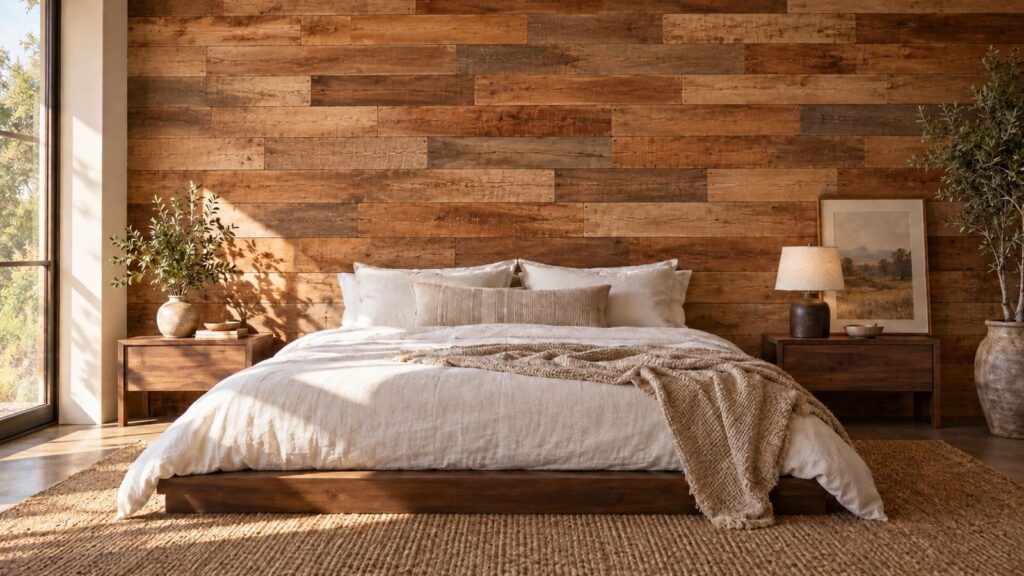
A reclaimed wood bedroom wall is a single accent wall, almost always the one behind the bed, covered in real barn wood planks instead of paint. It turns the headboard wall into the focal point of the room and adds warmth that a flat color can’t. At East Coast Rustic the planks are genuine 100+ year old barn wood, about 3/8 inch thick, so you get real texture and depth rather than a printed veneer.
Here’s the short version: pick the wall behind your bed, choose brown or grey to match your bedding, and plan on roughly 20 to 40 square feet for most rooms. The rest of this guide walks through where it works, how to choose a tone, what it costs, and how to put it up in an afternoon.
Where a reclaimed wood wall works in a bedroom
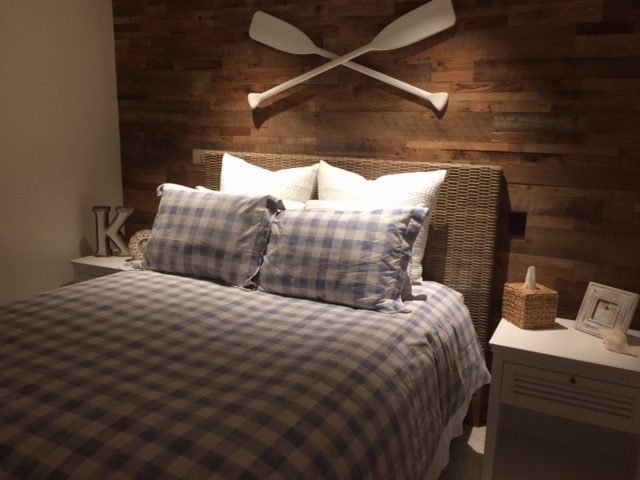
The wall behind the bed is the obvious choice, and it’s the one most customers do. It sits at eye level the second you walk in, and the bed frames it perfectly. You can run the wood floor to ceiling, or stop it a foot or two above the headboard for a lower-cost band that still reads as a full feature.
It doesn’t have to be the headboard wall, though. A reclaimed wood wall behind an open closet, around a reading nook, or on the wall your dresser and mirror sit against all work well. The one spot to skip is a wall you’ll cover with tall furniture, since you’d pay for wood nobody sees. If you want the wood to double as the headboard itself, plank the wall and let a low platform bed sit against it. That’s exactly what the customer bedroom above did, oars and all.
Brown or grey: which tone fits your bedroom
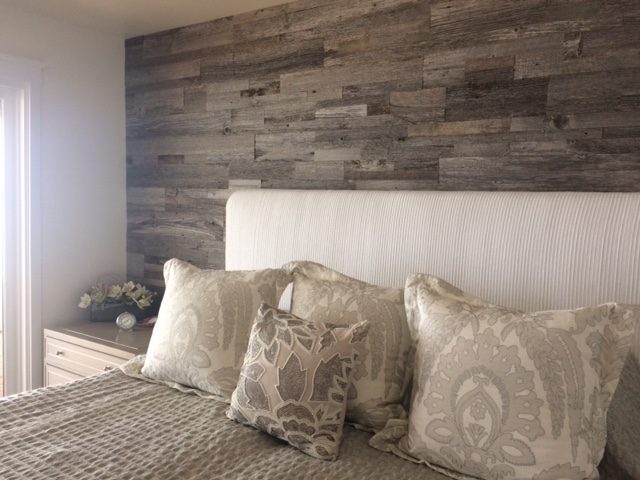
Both lines exist for a reason, and the bedroom is where the choice really shows. Brown barn wood brings warm walnut, honey, and tan tones that make a room feel cozy and cabin-like, which is why it pairs so naturally with white or plaid bedding.
It’s the tone that reads “retreat.”
Grey reclaimed wood runs cooler, with charcoal and silver weathering. It leans modern and calm, and it’s the easy pick if your bedroom already has grey, blue, or greige in the palette. The grey bedroom wall above is the same barn wood, just a different weather story. If you’re torn, look at your bedding and your floor first, then match the wood to whichever you’re keeping. Don’t try to run both colors on one wall, since we don’t sell a mixed brown-and-grey install and it tends to look busy behind a bed. You can compare the two in more detail in our grey reclaimed wood design guide.
How much wood you’ll need and what it costs
Measure the wall width times its height in feet, then add about 10 percent for cutting. A headboard wall behind a queen or king usually runs 8 to 12 feet wide and 8 feet tall, so a full wall lands in the 30 to 40 square foot range, or 20 or less if you stop above the headboard.
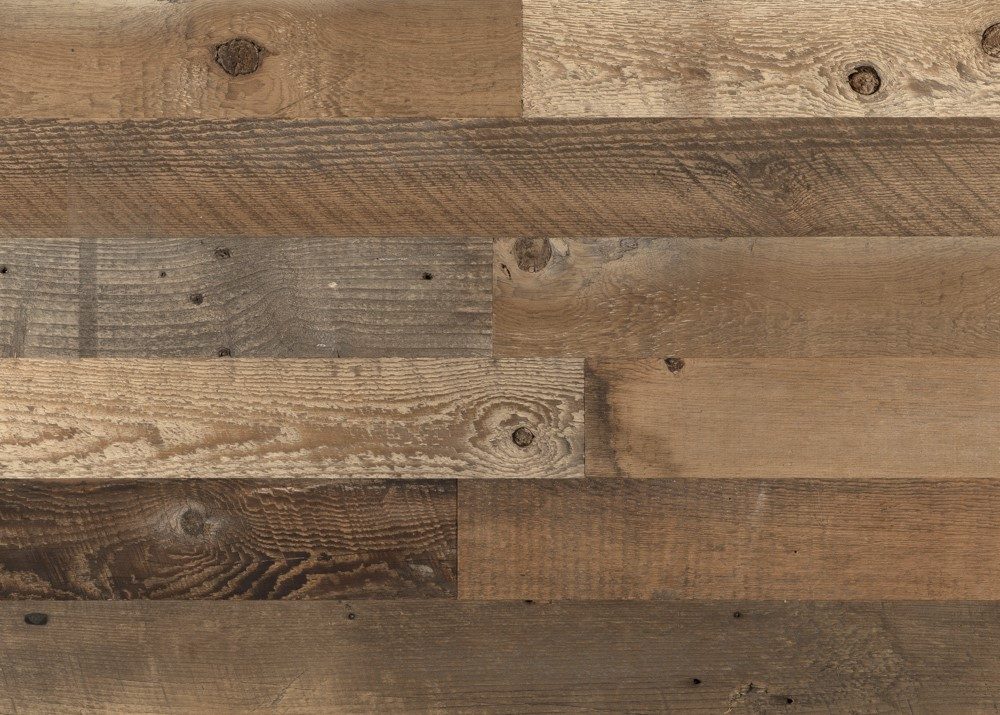
The wood is priced per square foot and ships in 20 square foot boxes at $215 a box, which works out to $10.75 per square foot. A one-box job covers a small band; two boxes handle most full headboard walls with a little left over for mistakes. Shipping is free on US orders over $200, so a full wall ships free. The 3.5 inch brown planks are the most popular for bedrooms because the narrower boards give you more seams and a busier, more authentic pattern. For the full math on any room size, see our accent wall cost guide.
How to put reclaimed wood on a bedroom wall
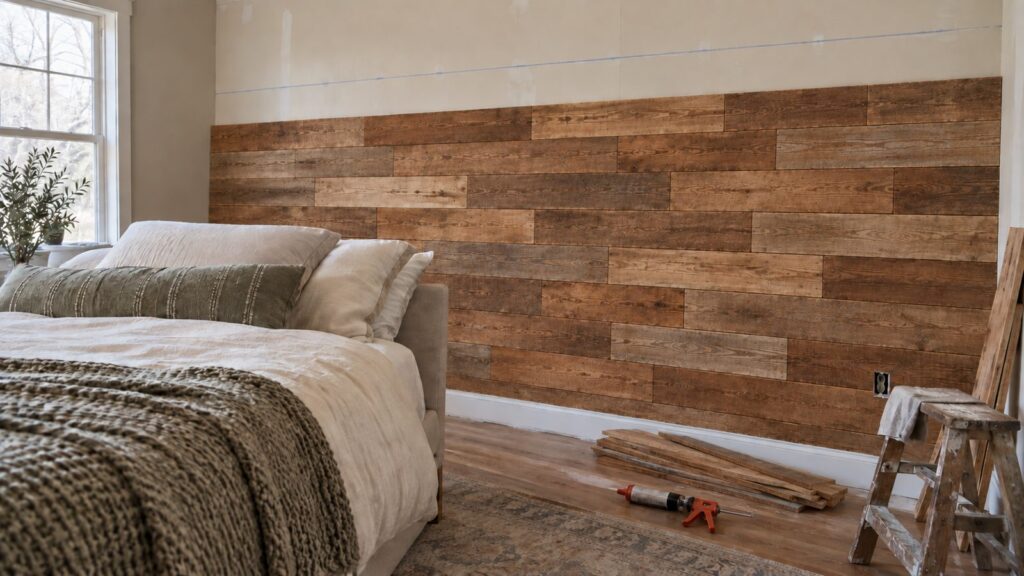
You don’t need to find studs and you don’t need a nail gun full of framing nails. A bead of construction adhesive on the back of each plank holds it to drywall, and a brad or two anywhere on the board keeps it flat while the glue sets. That’s the whole method, and it’s why people finish a bedroom wall in an afternoon.
Start with a level line about a third of the way up so a crooked ceiling doesn’t throw off your rows, then work out from there. Stagger the seams like brickwork so no two joints line up, and let the random plank lengths do that work for you. At the corners, run the boards to a simple butt joint and alternate which wall overlaps as you go up. Move the bed out about two feet, plank behind it, and slide it back when the glue has set. For a full step-by-step, our install guide covers tools and cuts in detail.
Frequently asked questions
Can I mount a reclaimed wood wall behind the bed without damaging the drywall?
Yes. Construction adhesive plus a few brads leaves only small holes, and the wood itself hides them. If you rent, plank a sheet of thin plywood on the floor, mount that to the wall with a handful of screws, and take the whole panel with you when you leave.
Is reclaimed barn wood safe to have in a bedroom?
It is. The barn wood is cleaned and prepped before it ships, so you’re putting up dry, sound wood, not something straight out of a field. If you want the full sourcing and prep rundown, we cover it in our post on whether reclaimed wood is safe for indoor use.
How thick is the wood, and will it stick out too far from the wall?
The planks are about 3/8 inch thick, so the wall gains roughly a third of an inch of depth. That’s enough to cast real shadow lines and read as genuine wood, but thin enough that outlets and a headboard still sit close to normal.
Do I need a headboard if I have a wood wall?
No, and plenty of people skip it. A planked wall behind a low platform bed acts as the headboard on its own, which is one of the reasons a bedroom wall is such a popular first project.
Related reading
- Reclaimed wood headboard ideas
- Reclaimed wood accent wall ideas for every room
- How much a reclaimed wood accent wall costs
- Shop DIY reclaimed wood walls
Ready to see the wood in person?
The tones read differently in your own light than they do on a screen, and a bedroom wall is worth getting right. Start with the 3.5 inch brown reclaimed wood planks or browse the grey line if your room runs cooler. Both ship free on US orders over $200 and cover about 20 square feet per box.