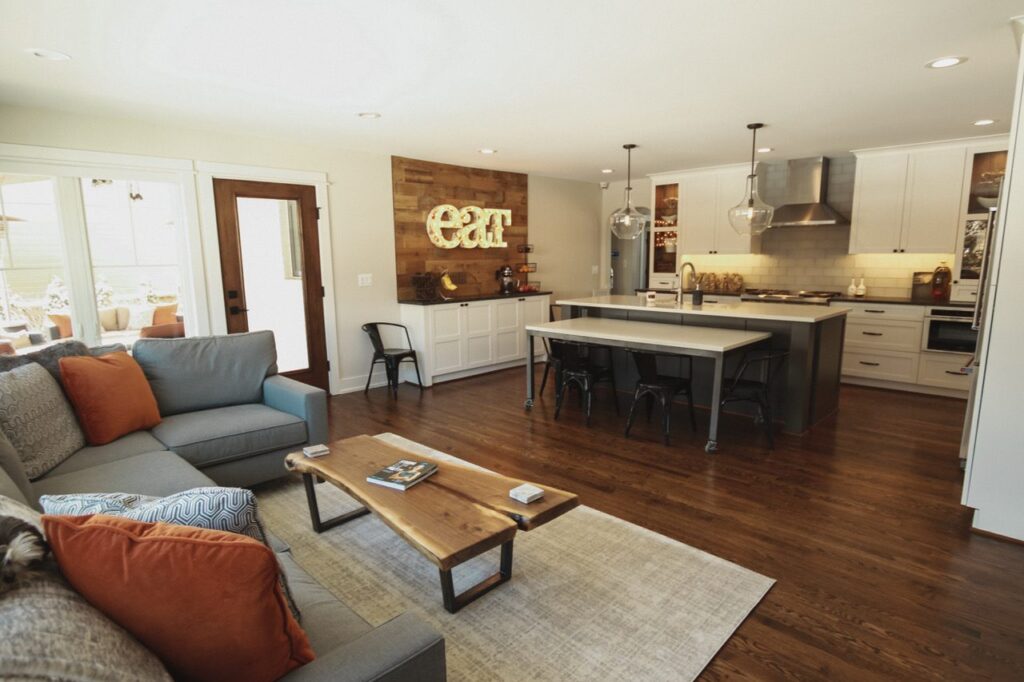
Cleaning a reclaimed wood wall takes about five minutes a month: run the soft brush attachment of your vacuum over the boards, top to bottom, and you’re done. Real barn wood has a matte, textured face that hides dust far better than painted drywall, so it asks for less upkeep than most people expect. The only real mistakes are water and the wrong products, and this guide covers both.
How often should you clean a reclaimed wood wall?
Dust it about once a month with the soft brush attachment on your vacuum, and that’s the whole routine for most walls. Kitchens and dining rooms, where cooking oils drift onto every surface, do better with a quick pass every two weeks.

Work from the top down so loose dust falls onto boards you haven’t done yet, and keep the brush moving with the grain. Light pressure is all it needs. A dry microfiber cloth works too, but wipe along the boards, never across them, or the cut ends of the planks will grab lint and hold it.
Skip feather dusters. They snag on the end grain and leave bits of feather behind.
We’ve shipped more than 1,100 orders of this wood, and the care question comes up constantly from people who assume an old barn board needs special treatment. It doesn’t. Every plank is denailed, cleaned and inspected before it goes in the box, so what’s on your wall is clean, dry, century-old wood that only needs dusting from here on.
How to spot clean grease, smudges and spills
For a mark, dampen a microfiber cloth with warm water and one drop of dish soap, wring it until it’s almost dry, wipe with the grain, then dry the spot right away with a second cloth. Never soak the board.
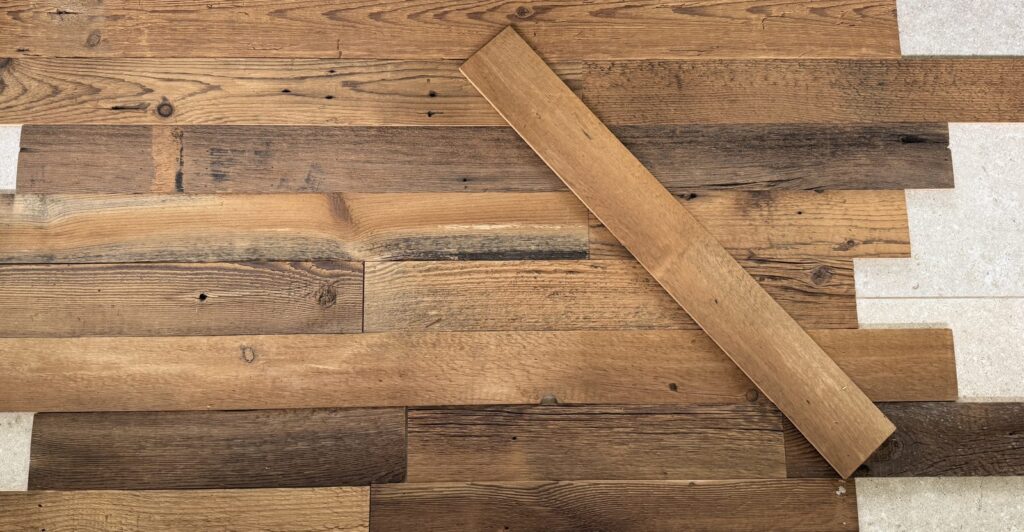
Raw wood drinks water. A wet board can swell, leave a ring, or loosen the adhesive bond behind it, and none of that happens if the cloth is barely damp. Spray the cloth, never the wall, and test a spot low near the floor first. Grease comes off with the dish-soap pass. Follow it with a plain-water wipe so no soap film is left to collect dust, then dry.
Here’s where people wreck a good wall. Bleach strips the silver out of grey boards and leaves pale blotches on brown. Oil soaps and spray furniture polish put down a wax or silicone film that goes sticky, darkens over time and makes the wood impossible to seal later. Melamine sponges are fine sandpaper in disguise and will polish a bright, smooth spot into a matte board. Steam cleaners drive moisture straight into the joints. If a product isn’t warm water with a drop of dish soap, don’t put it on reclaimed wood.
Should you seal a reclaimed wood wall to make it easier to clean?
Most walls don’t need sealing. Keep the wood raw and matte unless it sits in a splash zone or a high-touch spot, where two thin coats of matte water-based polyurethane make wipe-downs a damp-cloth job.
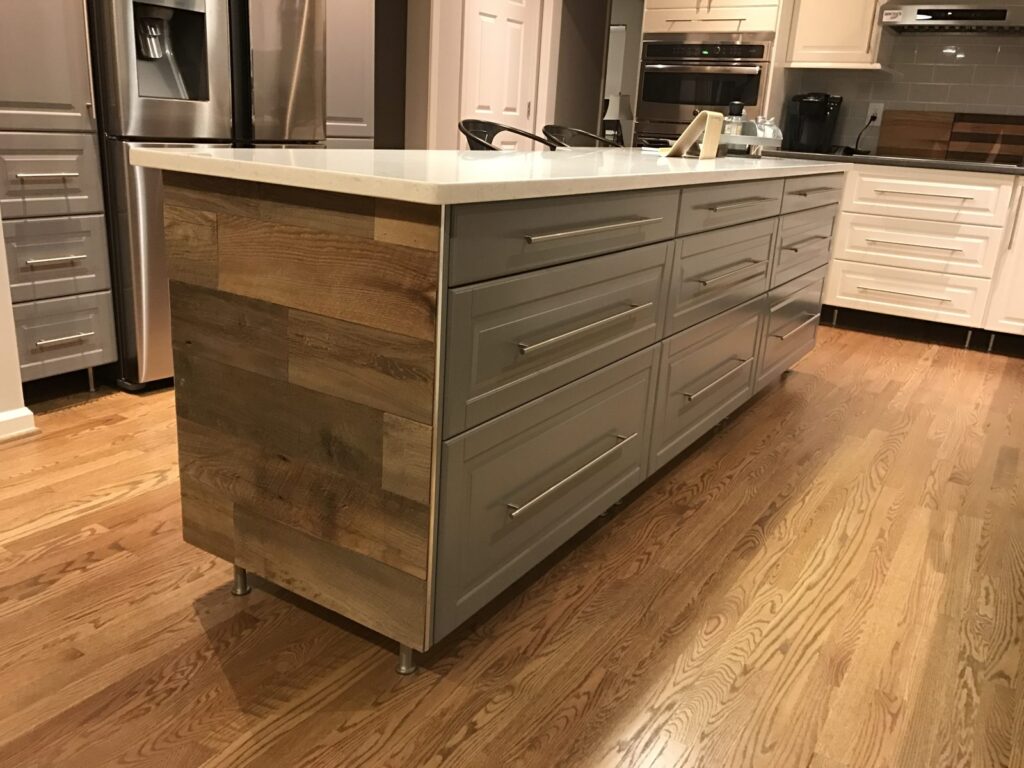
The spots that earn a sealer are the ones hands and food reach: a backsplash behind a sink or stove, a stair wall, a mudroom bench wall, the front of a bar or kitchen island, a kids’ room at hand height.
If you do seal, matte only. Satin and gloss make real barn wood look like laminate and turn every saw mark into a shiny line. Use a water-based product, because oil-based polyurethane ambers as it cures and will push the brown 3.5-inch reclaimed wood planks toward orange and give grey boards a yellow cast. The easiest time to do it is before the boards go up: lay them out on a drop cloth, brush on a thin coat, let it dry, add a second. A quart covers roughly 100 square feet per coat, so a five-box, 100-square-foot wall needs about a quart for two coats, around $20 of finish on a wall that costs $1,025 in planks at today’s $10.25 per square foot.
A sealed wall still looks like wood. It just stops absorbing, so a wipe with a damp cloth handles grease and fingerprints in seconds.
Long-term care: humidity, sun, scratches and loose boards
Keep the room between 35 and 55 percent humidity, leave small scratches alone because they vanish into century-old wood, and fix a loose board with a dab of construction adhesive instead of replacing it.
Wood moves with the seasons. In a dry winter house the boards shrink a hair and the seams open slightly, then close again in summer. That’s normal, and it’s why the planks sit in the room for 72 hours before installation.
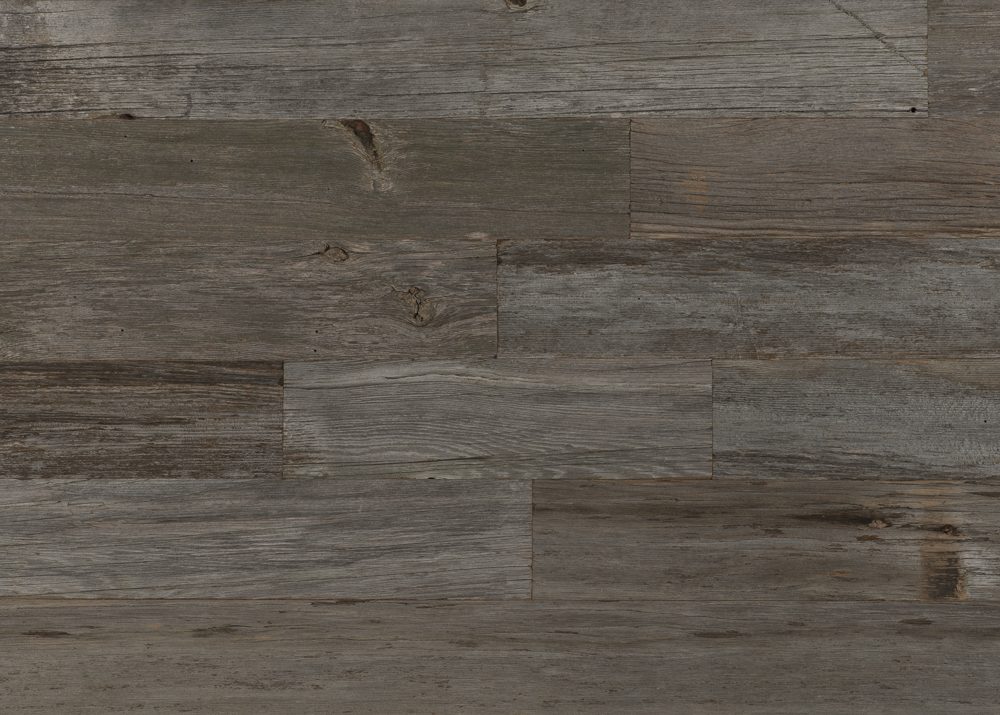
Direct sun through a south-facing window will lighten brown boards slowly over years, the same way it fades a wood floor. The grey reclaimed wood planks have already spent decades in the sun on the outside of a barn, so they change the least of anything we sell, and at $13.50 per square foot they’re worth a look for a sunny room.
Dents and scratches are honestly the least of your worries. The boards already carry a hundred years of them, and a new one disappears within a week of you noticing it.
A board that lifts at one end is a glue problem, not a wall problem. Work a bead of construction adhesive behind it, press it flat, and pin it with a brad or two anywhere on the board while the glue sets. You don’t need to find a stud.
Frequently asked questions
Can I use vinegar or oil soap on a reclaimed wood wall?
Skip both. Vinegar is acidic and will dull grey boards and streak brown ones, and oil soap leaves a film that darkens and goes sticky over time. Warm water with a drop of dish soap on a barely damp cloth handles anything short of paint.
Can I vacuum a reclaimed wood wall?
Yes, and it’s the best way to clean one. Use the soft brush attachment with light pressure, work top to bottom, and move with the grain. Keep hard plastic nozzles and beater bars off the wood, since they can scratch the surface.
How do I clean a reclaimed wood wall in a kitchen?
Dust it every two weeks instead of monthly, and wipe cooking splatter with a barely damp cloth and a drop of dish soap, then dry it. Right behind a stove or sink, seal the wood with two thin coats of matte water-based polyurethane so grease wipes off instead of soaking in.
Does a reclaimed wood wall need to be resealed?
An unsealed wall never does. A sealed backsplash, bar front or stair wall wants a fresh thin coat every few years where hands and water hit it most, which takes about twenty minutes.
Related reading
- Is reclaimed wood safe for indoor use?
- Wood backsplash: how to make it work in a real kitchen
- How to install a reclaimed wood accent wall
- How much does a reclaimed wood accent wall cost?
- Shop all DIY reclaimed wood walls
Ready to put real wood on the wall?
A wall that only needs a monthly dusting starts with the right boards. Our planks are 3/8-inch thick, milled from 100-year-old barns, in warm brown and weathered grey, priced per square foot with free US shipping over $200. Start with the brown 3.5-inch accent wall planks and put up a wall you’ll barely have to think about.