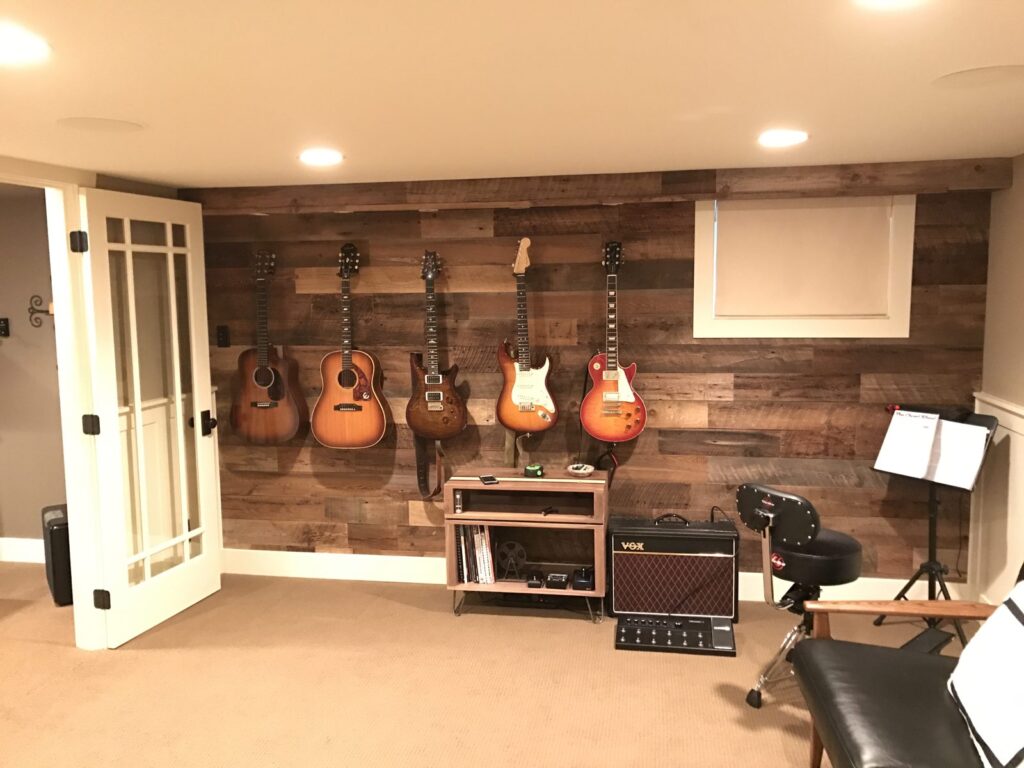
Here’s the short answer: measure your wall’s width and height in feet, multiply them to get square footage, subtract large openings like windows and doors, then add 10 percent for waste. That final number is how much wood to order. A typical 12 ft x 8 ft accent wall is 96 sq ft, which becomes about 106 sq ft with the waste buffer. Our reclaimed barn wood planks ship in 20 sq ft boxes, so that wall takes 6 boxes. It’s the same math behind 1,100+ orders we’ve shipped, including installs for a Hell’s Kitchen winner’s home makeover with Gordon Ramsay and the Baltimore Ravens’ studio.
The formula, step by step
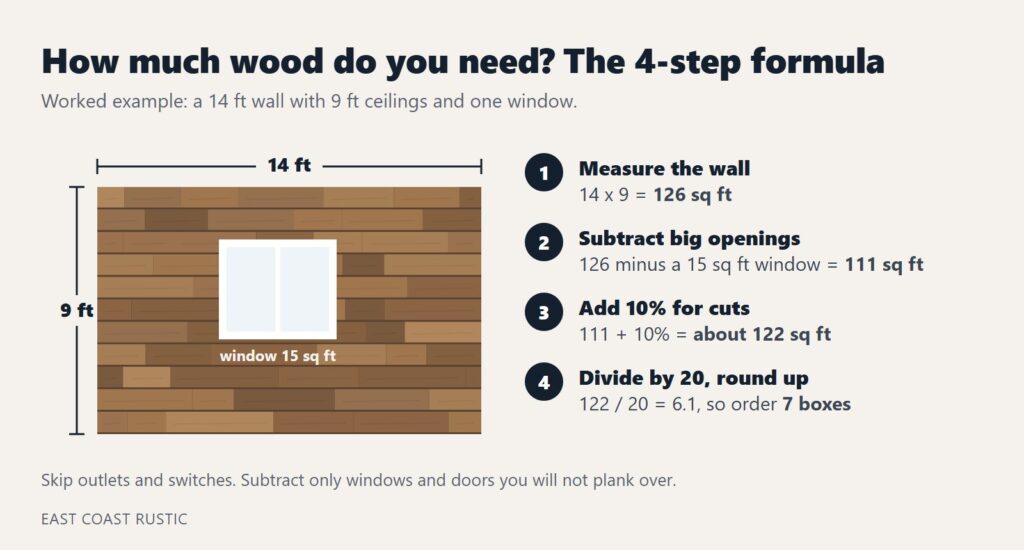
You don’t need a fancy calculator for this. Grab a tape measure and work through four steps:
- Measure the wall. Width x height, in feet. A wall 14 ft wide with 9 ft ceilings is 126 sq ft.
- Subtract big openings. A standard window runs about 15 sq ft, an interior door about 20 sq ft. Only subtract things you won’t plank over.
- Add 10 percent for waste. This covers end cuts, the odd board you set aside, and trimming around corners.
- Divide by box coverage. Each of our boxes covers 20 sq ft. Round up to the next full box.
So the 126 sq ft wall with one window: 126 minus 15 is 111, plus 10 percent is about 122 sq ft, divided by 20 is 6.1. Order 7 boxes.
Round up, always.
Coverage chart for common wall sizes
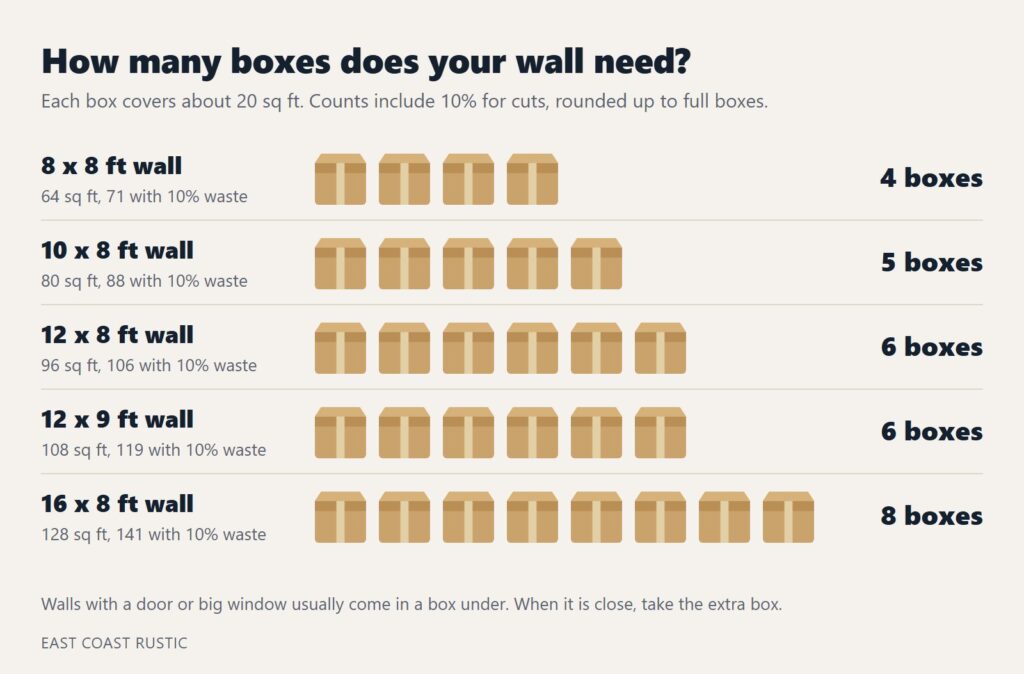
Most accent walls fall into a handful of sizes. Here’s the math already done, assuming no openings:
| Wall size | Square feet | With 10% waste | 20 sq ft boxes |
|---|---|---|---|
| 8 ft x 8 ft | 64 | 71 | 4 |
| 10 ft x 8 ft | 80 | 88 | 5 |
| 12 ft x 8 ft | 96 | 106 | 6 |
| 12 ft x 9 ft | 108 | 119 | 6 |
| 16 ft x 8 ft | 128 | 141 | 8 |
One note on that last row. When the waste buffer barely tips you into another box (141 sq ft needs an 8th box for a single square foot), a wall with a window or door will usually come in under. When in doubt, take the extra box anyway. I’ll explain why running short is the expensive mistake below.
What to subtract, and what to ignore
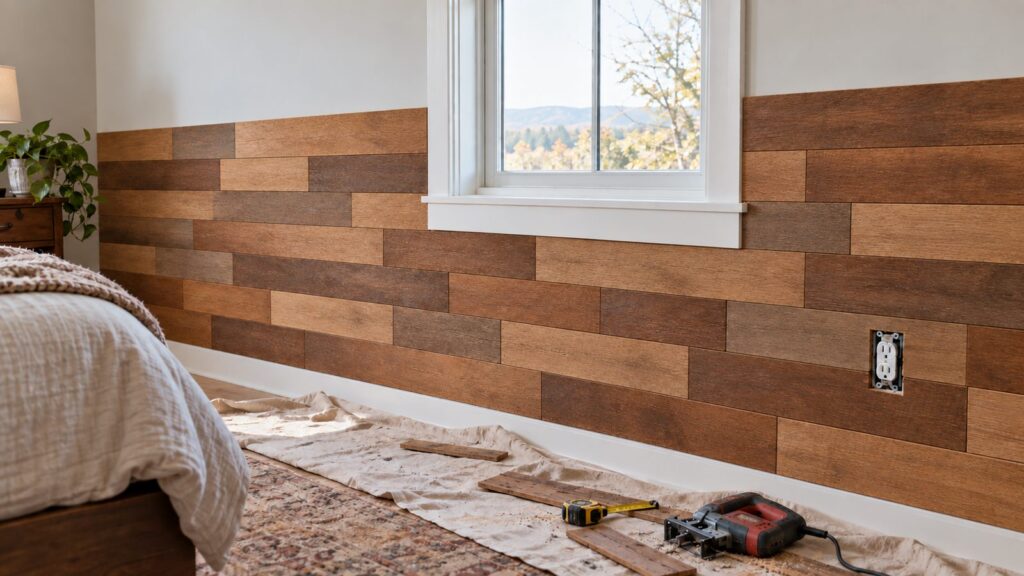
Subtract windows and doors. They’re big enough to matter, and planking stops at the casing.
Don’t subtract for outlets, switches, or vents. Each one saves you a few square inches of wood but still costs you a cut, and you want slack for exactly those cuts. We covered the technique in our guide to cutting around outlets on a wood wall.
Fireplaces and built-ins are judgment calls. If the planking wraps a fireplace on three sides, treat the firebox as an opening but leave the mantel strip in your total. Odd shapes eat wood faster than flat runs.
Why reclaimed planks waste less than you’d think
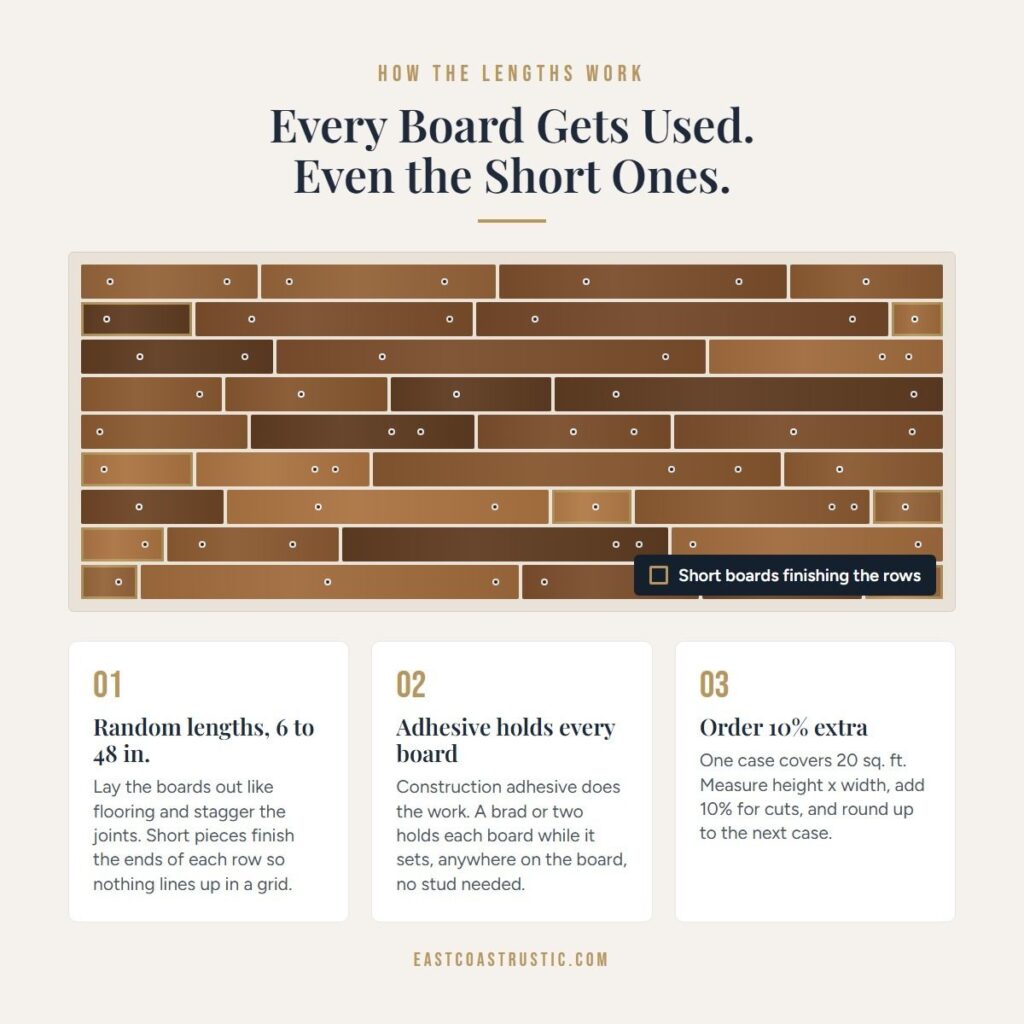
The 10 percent rule comes from the lumber world, where you’re cutting long fixed-length boards and every cut end is scrap. Our planks work differently. They come in random lengths up to 48 inches, in 3.5 inch or 5.5 inch widths, and the layout is a staggered brick pattern. The offcut that ends one row starts the next one, so most “waste” goes right back on the wall.
In practice, many customers finish with usable boards left over. Keep them. A 100+ year old board makes a great shelf, frame, or repair piece, and it’ll match your wall because it came from the same lot.
Here’s the trap with ordering short, though. Reclaimed barn wood varies lot to lot. That’s the whole appeal, but it means a single top-up box ordered months later may read slightly different in tone than the rest of your wall. Ordering enough up front isn’t upselling, it’s how you get a wall that looks like one wall.
What that much wood costs
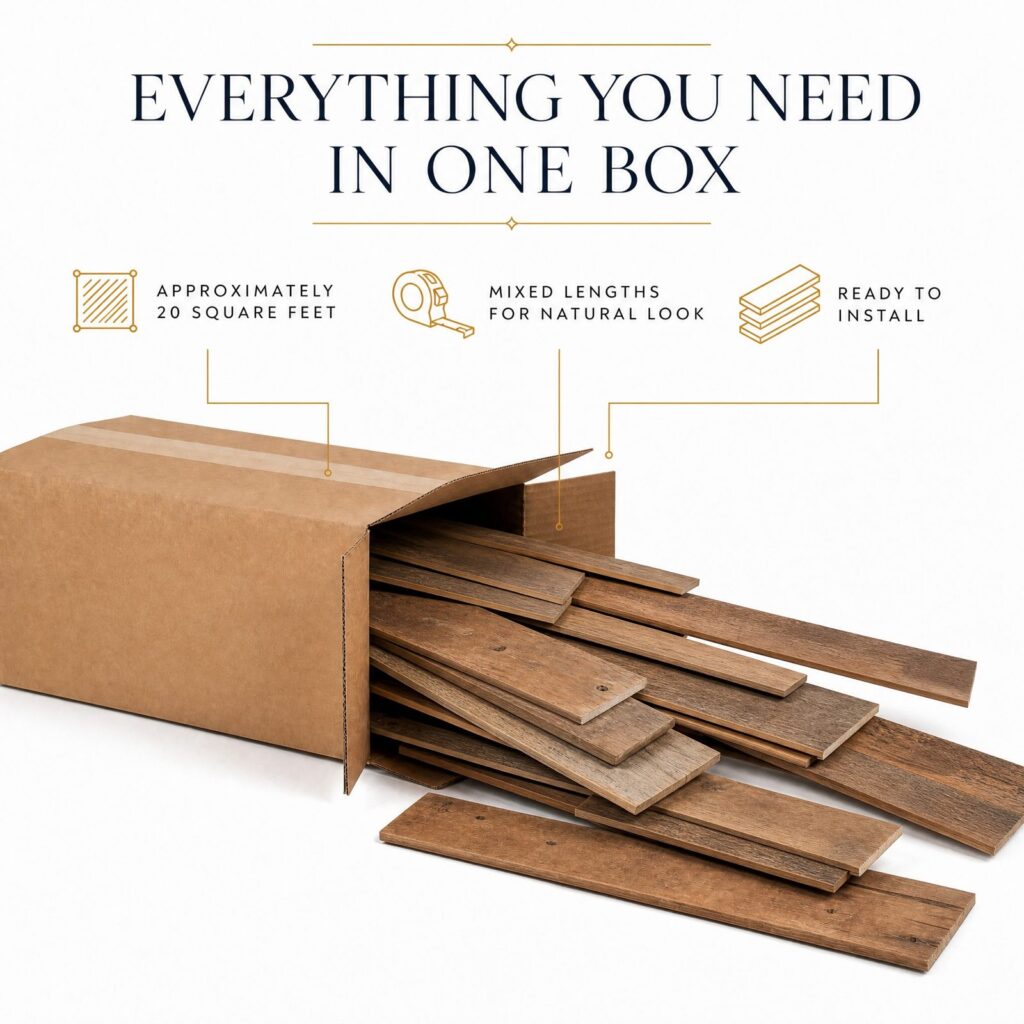
Our reclaimed wood runs $10.75 per square foot, or $215 per 20 sq ft box, in both the brown line and the grey line. The 12 ft x 8 ft wall from the chart, at 6 boxes, lands at $1,290 with free US shipping (every order over $200 ships free, so a single box qualifies). For a deeper breakdown against paint, tile, and faux options, see our reclaimed wood accent wall cost guide.
That’s real 3/8 inch thick barn wood from structures that stood for over a century, not a thin printed veneer. The price gap between the two is smaller than most people expect once you count the tools and adhesive the cheap stuff still needs.
Frequently asked questions
How many boxes do I need for a 10 ft x 8 ft accent wall?
That wall is 80 sq ft. Add 10 percent for waste and you’re at 88 sq ft, so order five 20 sq ft boxes. You’ll have a few boards spare, which is exactly where you want to be.
Should I subtract windows and doors from my measurement?
Yes, subtract anything you won’t plank over. A typical window is about 15 sq ft and a door about 20 sq ft. Leave outlets, switches, and vents in your total since they only remove a few square inches each.
How much extra wood should I order for waste?
Add 10 percent for a straight horizontal install. Go to 15 percent if your wall has angles, a vaulted ceiling, or lots of openings. Random-length planks in a staggered pattern recycle their own offcuts, so you rarely need more than that.
What happens if I order too little?
You can order more, but reclaimed wood varies from lot to lot, so a later box may differ slightly in tone. If your project is tight on coverage, order the extra box with the original batch so the whole wall comes from matching stock.
Related reading
- How much does a reclaimed wood accent wall cost?
- How to install a reclaimed wood accent wall
- Reclaimed wood paneling: what it is and how to choose
- DIY accent walls: start here
Ready to put your number to work?
Once you know your square footage, ordering is simple: pick your color line and width, and order by the box. Start with our brown reclaimed wood planks in 3.5 inch width, or browse the grey and 5.5 inch options if those fit your room better. If you land between box counts, take the extra box. Your future self, holding a matching board two years from now, will thank you.