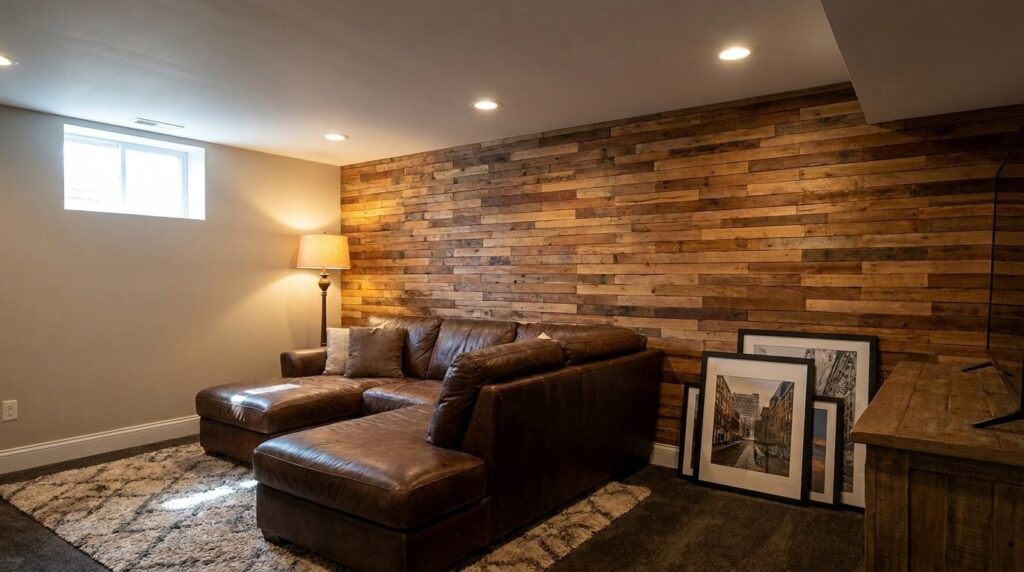
A reclaimed wood basement wall is the fastest way to make a below-grade room feel like the best room in the house. East Coast Rustic planks are solid 3/8 inch barn wood from 100+ year old barns, milled to 3.5 or 5.5 inch widths in random lengths up to 48 inches, and they glue straight over the drywall most finished basements already have. One box covers 20 square feet, so a typical accent wall takes 5 or 6 boxes and a weekend afternoon.
Why reclaimed wood works in a basement
Basements fight you on atmosphere: low ceilings, few windows, flat builder-grade drywall. A reclaimed wood accent wall fixes that in one move because the mixed browns and real weathering give the room depth that paint can’t fake. The planks are solid wood about 3/8 inch thick, so they add warmth and texture without eating into the room the way furred-out stone or paneling systems do.
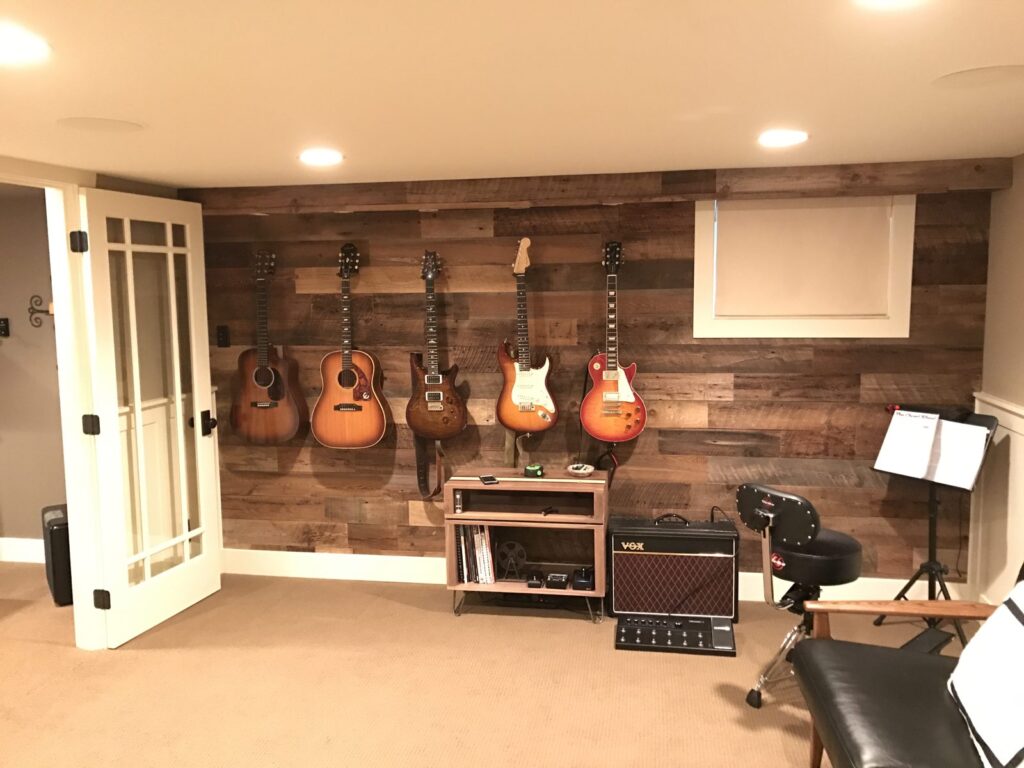
They’re also a practical match for how basements get used. A wall of brown reclaimed wood planks hides the dings from pool cues, guitar headstocks, and kids’ toys that would scar painted drywall in a month. Every board already survived a century on a barn; your rec room won’t scare it.
We’ve shipped over 1,100 of these walls, and basements are where customers send back the best photos.
Check for moisture before you order wood
Run this 48-hour test before you spend a dollar: tape a 2 foot square of plastic sheeting to your bare concrete wall or floor, seal all four edges, and wait two days. Condensation under the plastic means ground moisture is coming through, and you need to fix that before any wood goes up. A dry result in a finished basement that sits between roughly 35 and 55 percent humidity is a green light.
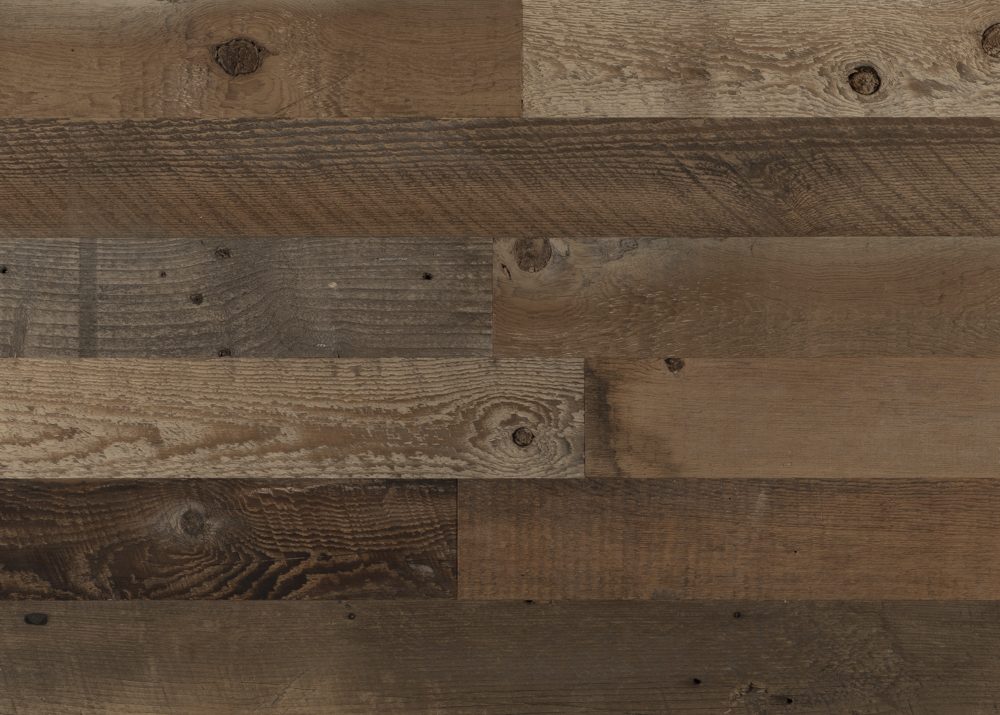
The planks want a flat, dry surface: drywall, plywood, or existing paneling all work. Don’t glue them to bare concrete or cinderblock, even in a dry basement. Concrete wicks moisture from the ground year round, so frame the wall or add plywood first and keep the wood on the dry side of it.
Once the surface is right, the install is the same adhesive-and-brads method covered in our full installation guide. You don’t need to find studs, and there’s no special basement technique. Let the boxes sit in the basement for a few days first so the boards settle into the room’s humidity.
If your basement needs a dehumidifier to stay comfortable, run it. The wood will be as happy as you are.
Man cave and basement bar ideas
The basement walls that get the most from reclaimed wood are the media wall behind the TV, the bar front, and the back wall of a game or music area, because those are the walls people actually face. One customer turned his basement into a full gaming den with plank walls on two sides; another hung five guitars on his basement music room wall and let the wood do the backdrop work (that’s the music room pictured earlier in this post).
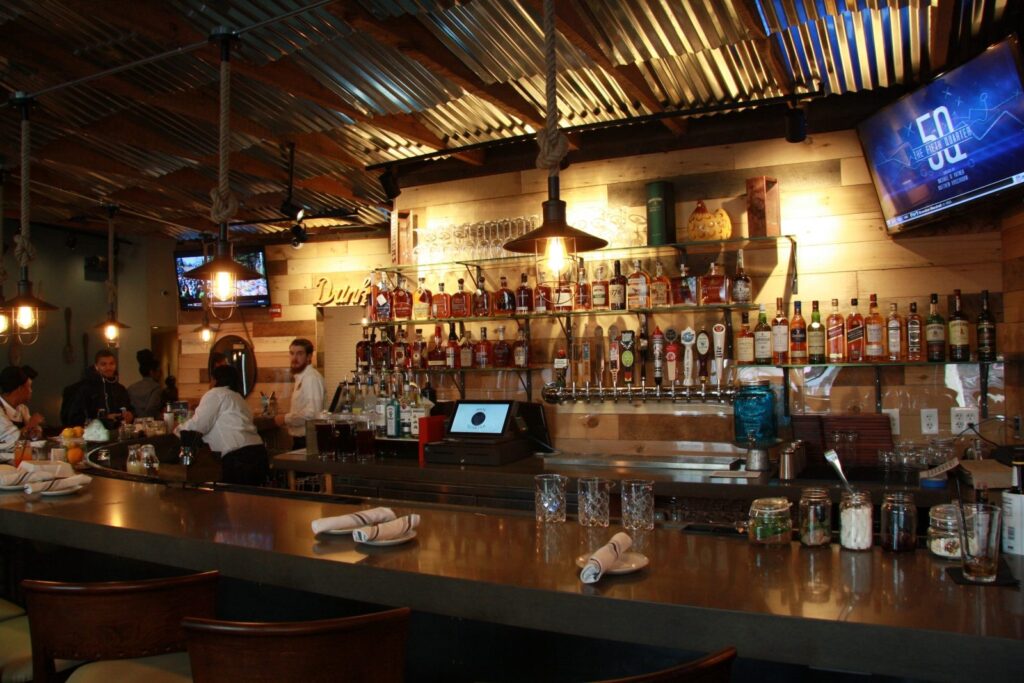
Bars deserve special mention. Planking the front of a basement bar takes about 28 square feet for an 8 foot bar, which is two boxes of wood, and it instantly reads like a place you’d pay for drinks. Restaurants figured this out a while ago: the Hen Quarter bar pictured in this section is an East Coast Rustic install, and the Baltimore Ravens put our planks in their studio.
Here’s the trap to avoid: don’t plank every wall. One wood wall makes a basement feel designed; four make it feel like a sauna. Pick the wall your furniture faces, and if the room runs dark, grey reclaimed wood planks keep the texture while reflecting more of your limited light. Stick to one color line per wall, since brown and grey aren’t meant to mix in a single install.
What a basement accent wall costs
A typical 12 by 8 foot basement accent wall is 96 square feet. Add 10 percent for cuts and waste and you’re at roughly 106 square feet, which rounds up to 6 boxes at 20 square feet per box. In brown 3.5 inch planks at the current sale price of $10.25 per square foot, that’s 120 square feet of wood for $1,230, shipped free in the US since it clears the $200 free-shipping threshold.
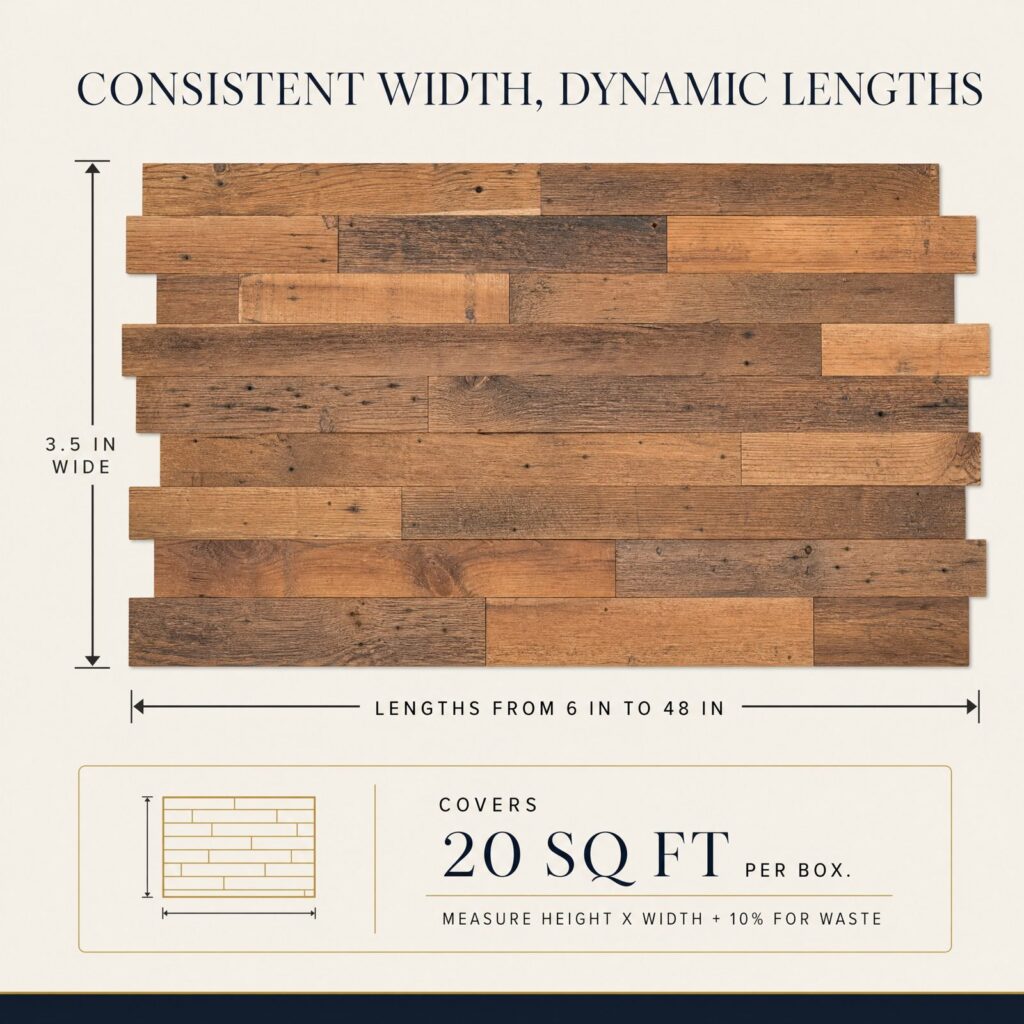
Grey runs a little more at $13.50 per square foot, so the same wall is $1,620. A half-height wall or bar front costs far less: two boxes of brown is $410.
The full math with a box chart is in our guide to how much wood you need for an accent wall, and the accent wall cost breakdown compares both color lines.
Frequently asked questions
Can I install reclaimed wood directly on a concrete basement wall?
No. Concrete and cinderblock wick ground moisture year round, so glue will eventually fail and the boards can cup. Frame the wall with drywall or plywood first, then glue the planks to that dry surface.
Will reclaimed wood warp in a basement?
Not in a dry, finished basement kept around 35 to 55 percent humidity. These boards air-dried for over a century in a barn, so they’re far more stable than new lumber. Let the boxes acclimate in the basement for a few days before installing and run a dehumidifier if the space needs one.
How much does a reclaimed wood basement wall cost?
A 12 by 8 foot wall (96 square feet) takes 6 boxes and costs about $1,230 in brown 3.5 inch planks at $10.25 per square foot, or $1,620 in grey at $13.50. Smaller projects like an 8 foot bar front run about $410.
Do I need to seal the wood in a basement?
Sealing is optional in a dry basement. The one spot worth sealing is a bar top or any surface that will see spills and glasses, where a matte polyurethane keeps the wood wipeable without killing the reclaimed look.
Related reading
- Reclaimed wood TV wall: design, mounting, and cost
- How to plan a barnwood feature wall
- Is reclaimed wood safe for indoor use?
- How much wood do I need for an accent wall?
- DIY walls: start here
Ready to warm up your basement?
Every box is real barn wood with a century of character already in it, cut to install in an afternoon. See the brown 3.5 inch reclaimed wood planks that anchor most of the basement installs on this page, currently on sale at $10.25 per square foot with free US shipping over $200.